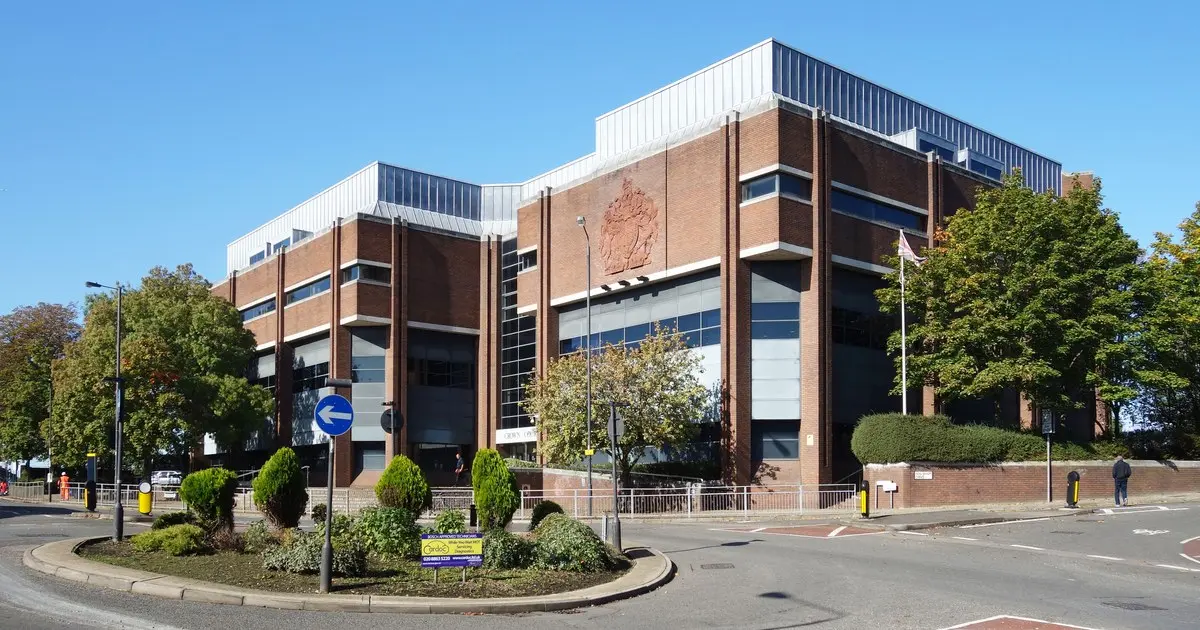
Six members of a criminal network that converted blank-firing guns into live firearms and supplied them across London have been jailed, in a case the Metropolitan Police said had removed a significant source of illegal weapons from the capital’s streets.
The group was sentenced at Harrow Crown Court today after a 10-month investigation during which officers recovered 14 converted firearms linked to the network before they could be sold on.
Central to the operation was Faisal Razzaq, 44, described by detectives as a key distributor who moved converted weapons from a makeshift workshop to buyers across the city. He has been jailed for life with a minimum term of eight years.
Razzaq is a name already known to the criminal justice system. He was previously jailed for the manslaughter of PC Sharon Beshenivsky, the West Yorkshire officer shot during an armed robbery in Bradford in 2005. He was released on licence in 2017 and moved to London, where Met detectives began investigating him in May 2024 after intelligence suggested he was involved in the sale and transfer of firearms.
He was arrested in September that year. The evidence gathered by detectives was so strong, the Met said, that he pleaded guilty to a series of firearms offences.
The other sentences handed down today were: Robert Dorey, eight years in prison; Ricky Dorey, 10 years; Abdul Rahman Saleh, seven years and six months; Patrick Loughnane, eight years and six months; and Tammy Rigg, five years and three months.
Detective Inspector Andy Durham, from the Met’s Specialist Crime Command, said: “Today’s sentences bring this complex investigation to its conclusion. Faisal Razzaq, someone who was previously involved in the fatal shooting of a police officer, played a pivotal role in moving these dangerous converted firearms onto London’s streets. I am pleased the Met investigation has resulted in Razzaq being jailed again for a significant period of time. By dismantling the entire network, from those converting the weapons to those distributing and storing them, we have prevented a significant number of illegal firearms from reaching the public. The Met continues to intensify its work to drive down firearms offences and take weapons off the streets. Last year alone, officers seized 676 firearms, a 75 per cent increase on 2024. Our teams will continue to relentlessly target anyone involved in gun crime.”
The workshop in a caravan
The network revolved around a conversion workshop run from a caravan. The Met said Thomas McKenna, 60, of Buckles Lane, South Ockendon, turned blank-firing weapons into functioning firearms there. He was jailed for 16 years at an earlier hearing in February after admitting a string of firearms offences, as well as making explosives and possessing terrorist material.
His partner, Tina Smith, 55, also of Buckles Lane, was given six years’ imprisonment after pleading guilty to possessing a firearm, making explosives and possessing terrorist material.
Detectives said Razzaq worked closely with brothers Robert and Ricky Dorey, who lived near McKenna, to distribute the converted guns. Saleh helped Razzaq handle and move the weapons, Loughnane acted as a go-between for the Doreys and McKenna, and Rigg stored a converted firearm at her home on the group’s instructions.
Two gun customers were also sentenced: Allan Crosby, 44, of Etfield Grove, Sidcup, and Ryan Smith, 44, of Morants Court Road, Dunton Green, who received 10 years and seven and a half years respectively after being found with a converted Ceonic pistol and modified ammunition.
Why blank-firing guns worry police
Blank-firing weapons are designed to fire only noise and gas, and in their original form are far easier to buy legally than real firearms. The problem, as police forces across the country have warned for years, is that many models can be drilled out, re-barrelled or otherwise modified into guns capable of firing live rounds — and the modifications can be hard to detect without laboratory examination.
Converted blank-firers have turned up in a string of serious offences in London, which is why the Met treats workshops that convert them as a priority. Today’s sentences followed a pattern detectives say they see repeatedly: a conversion specialist at the centre, a distributor with established underworld contacts, and a chain of cut-outs and safe houses designed to keep the guns’ origin hidden.
In this case, the investigation began in May 2024 when intelligence flagged Razzaq as a central figure. Covert surveillance then linked him to a firearm seized from a vehicle travelling to Notting Hill Carnival on 26 August 2024, which forensic specialists traced back to McKenna’s workshop. When officers raided the site on 6 November 2024, they found a lathe, drills and other tools used to convert the weapons, alongside ammunition, improvised explosive devices and extremist material. More than 100 items were recovered.
Record year for seizures
The Met said the investigation had also contributed to a significant reduction in shootings involving converted blank-firing weapons. The figures point to a sustained offensive: last year alone, officers seized 676 firearms across London, a 75 per cent increase on 2024.
With the last of the network now sentenced, detectives believe a pipeline that could have put dozens more live guns onto the streets has been shut down for good.
Related: a Clapham rider has been jailed after a 189mph police chase; tributes have been paid to Ishmael Sankoh, the 17-year-old killed in an Enfield e-bike crash; and a Barnet shop was fined almost £10,000 for selling a knife to teenage cadets.