Street lights are being torn down around parts of Dulwich as Thames Water admits that repairs to a cluster of damaged water mains remain “complex”, with engineers now digging nearly four metres below ground to reach the broken pipes.
Teams are working extended hours around Sydenham Rise, Woodvale Road and Dulwich Common, the water company said, with additional valves needing to be installed and lampposts removed so the deep excavation can continue safely.
Traffic management remains in place on Sydenham Rise while the work goes on, and barriers are still holding back pedestrians from a sinkhole on the footpath at Woodvale Road, where Thames Water has been monitoring water escaping from a damaged main.
Digging nearly four metres down
The scale of the job has become clear as the repair programme drags on. One water main opposite the Horniman Museum has already been fixed, but a second damaged section on Sydenham Rise was found around 3.7 metres below the surface, requiring further excavation simply to give teams safe access.
Investigations are also continuing at Dulwich Common, where engineers are still trying to establish whether yet more repairs will be needed. Thames Water has not said when the work will be finished.
Darker streets and diverted traffic
The removal of street lights will be felt most after dark. With lampposts taken out of action to allow the digging to proceed, residents walking home on unlit stretches will notice the difference — and the timing is far from ideal, with the clocks going back this weekend and evenings drawing in.
Drivers, meanwhile, continue to face traffic management on Sydenham Rise, one of the main routes through the area, with no indication yet of when normal flows will resume.
What residents need to know
For people living near the works, the practical picture is this: expect Thames Water crews on site for extended hours, including early starts and late finishes; treat Sydenham Rise as a route to avoid if you can; and give the cordoned-off sections of footpath a wide berth, particularly the sinkhole barriers on Woodvale Road, which remain in place while engineers monitor water escaping underground.
Anyone who spots new water bubbling up through the road surface, a fresh dip in the pavement, or a street light that has gone dark in the affected area should report it to Thames Water directly so it can be logged against the ongoing incident.
Why repairs this deep take so long
Mains buried nearly four metres down are beyond the reach of a quick fix. Getting to them means excavating a stable, shored-up trench, often through layers of road, sub-base and other buried utilities — and each new valve installed has to be bedded, connected and pressure-tested before water can flow normally again.
The company’s description of the situation as “complex” suggests engineers are dealing with more than one point of failure. With investigations still under way at Dulwich Common, the repair footprint could yet grow rather than shrink — which is why the extended hours and the removal of street furniture such as lampposts have been brought in now rather than later.
Part of a wider Thames Water repair push
The Dulwich dig is the latest in a run of water-main incidents troubling London this week. In Sidcup, The Spinney is closing from Monday for a 132-day mains replacement programme, while a burst main shut the A409 in Harrow earlier this week, diverting eight bus routes.
Thames Water has been contacted for further comment on the Dulwich repair timeline. We will update this story as more information becomes available.
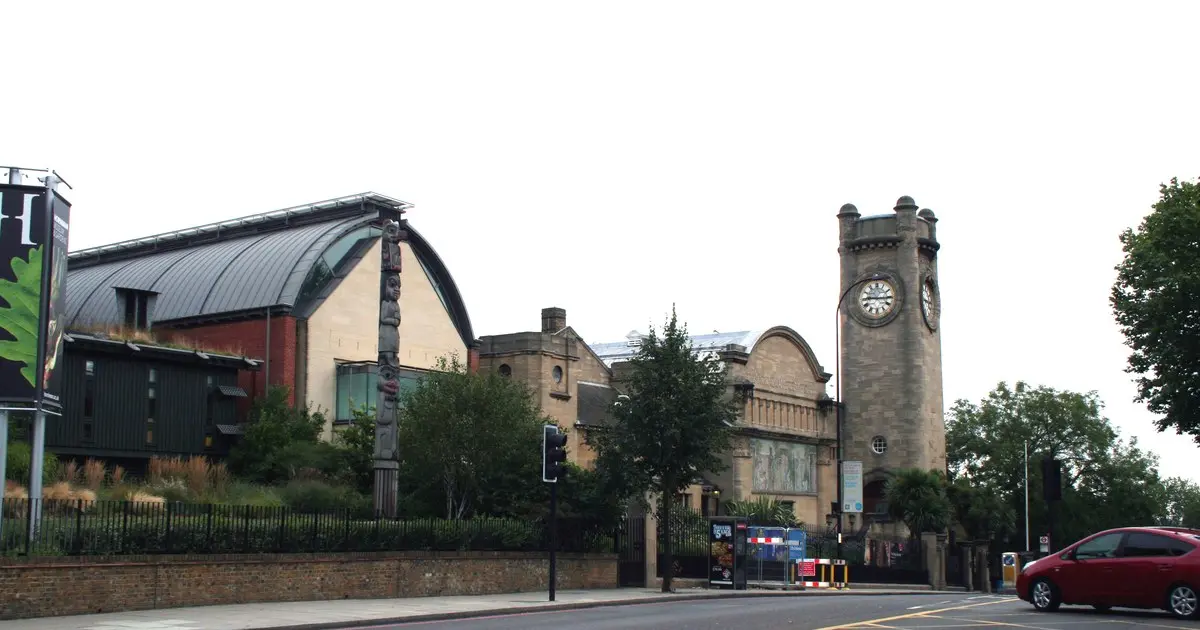
File photo: the Horniman Museum in Dulwich, near where one of the damaged mains has been repaired. Photo: Dr Neil Clifton, CC BY-SA 2.0.