


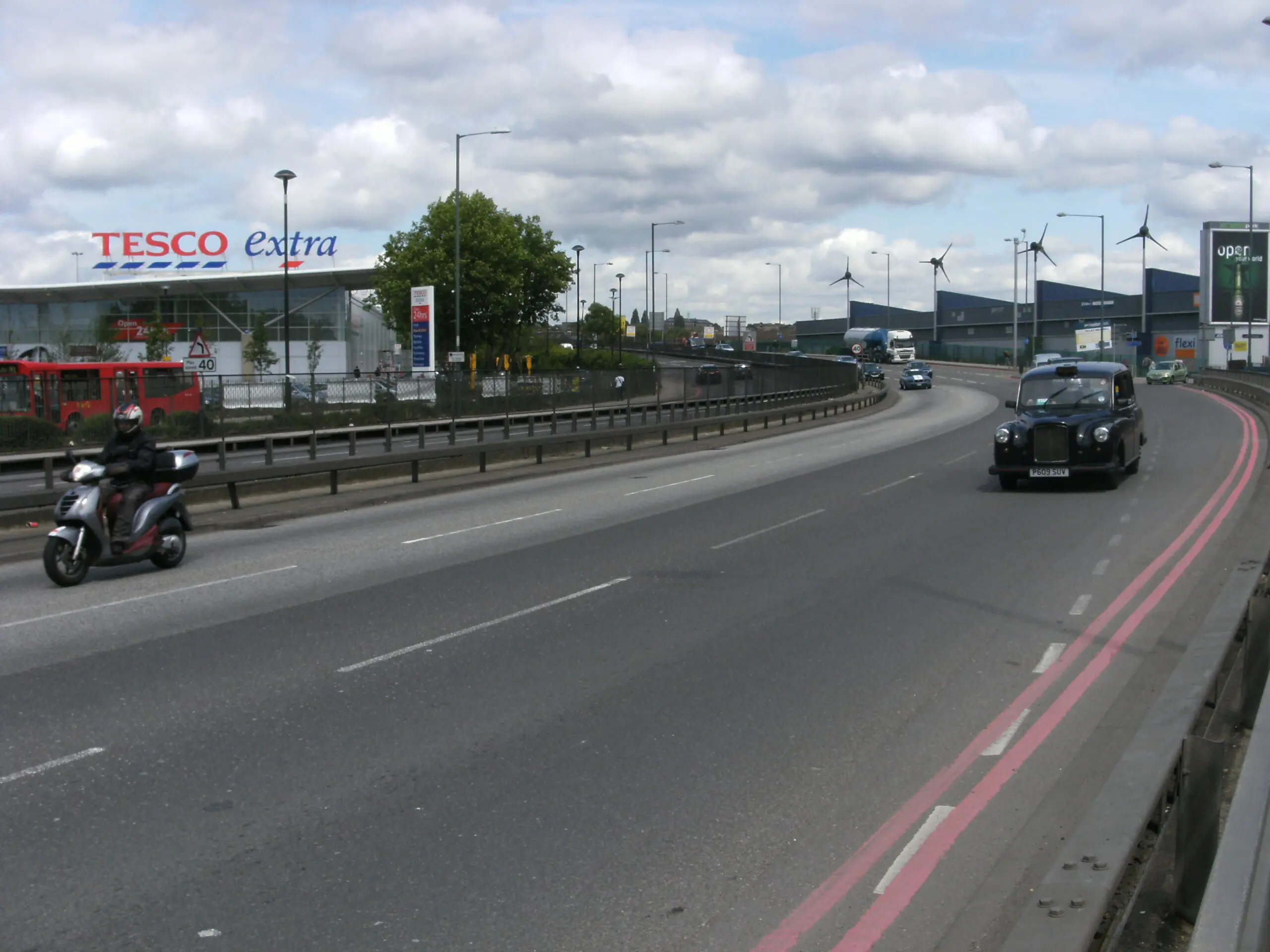
A woman has been taken to hospital after the A406 Stonebridge crash forced the road to close in both directions on Friday afternoon.
The collision happened at around 1.28pm on Friday (October 2) at the junction with Woodheyes Road in Stonebridge, NW10, on a busy stretch of the North Circular through north-west London.
London Ambulance Service crews were called to the scene. A spokesperson for the service said: “We treated a patient at the scene and took her to a local hospital.” No further details about her condition have been released.
Officers shut the A406 in both directions between junction 1 of the M4 at the Chiswick Roundabout and Gunnersbury Lane (the A4000) so that investigation work could be carried out at the scene.
The closure triggered long queues on the surrounding road network, with traffic diverted through Acton Town, Chiswick High Road and South Ealing. Drivers were urged to avoid the area and allow extra time for their journeys while the carriageway remained shut.
Stonebridge sits on one of the most heavily used sections of the North Circular, close to Brent Park and the junctions that feed traffic between Harlesden, Wembley and Park Royal. The route mixes local shoppers’ traffic with long-distance lorries and delivery vans, which is part of the reason a closure here is felt so widely across west London.
The Woodheyes Road junction lies just off one of the North Circular’s busiest interchanges, where local traffic from Stonebridge and Harlesden merges with vehicles travelling between the A40 and the M1. Transport planners have long described the North Circular as one of London’s most challenging roads to manage: it was never built as a motorway, yet it carries motorway-level volumes through densely populated neighbourhoods, with frequent junctions, bus stops and pedestrian crossings interrupting the flow.
When a serious collision happens, officers typically close the carriageway to preserve evidence, measure skid marks and debris, and give collision investigators a safe working area. That painstaking process is why closures can last for hours even after casualties have been taken to hospital, and why drivers are asked to be patient rather than attempting to turn around or drive the wrong way along closed slip roads.
The North Circular is one of the busiest roads in the capital, and collisions on the route frequently bring long sections of it to a standstill. Friday’s incident follows an earlier closure of the North Circular in east London which left drivers facing serious delays, and a crash at Henlys Corner which sparked major queues for motorists heading across the capital.
Emergency services regularly warn that collisions on fast, multi-lane roads such as the A406 can have serious consequences. In recent years the number of lower speed limits across the capital has grown sharply as part of efforts to cut road danger: London’s 20mph speed limits have more than tripled under Sadiq Khan, figures show, as City Hall pursues its Vision Zero ambition of eliminating deaths and serious injuries from the road network.
For drivers caught up in closures like Friday’s, motoring organisations advise checking live travel updates before setting off, following the signed diversion routes rather than trying to cut through residential streets, and never ignoring “road closed” signs or police cordons. Investigation work after a collision can take several hours, particularly where officers need to examine the scene in detail.
Drivers are also reminded to keep well back from emergency vehicles working at the scene and to avoid slowing down to look, which can cause secondary collisions and add to delays on the opposite carriageway.
The closure stayed in place on Friday afternoon while investigation work continued. Anyone planning to use the North Circular through west and north-west London was advised to check for updates before travelling.