


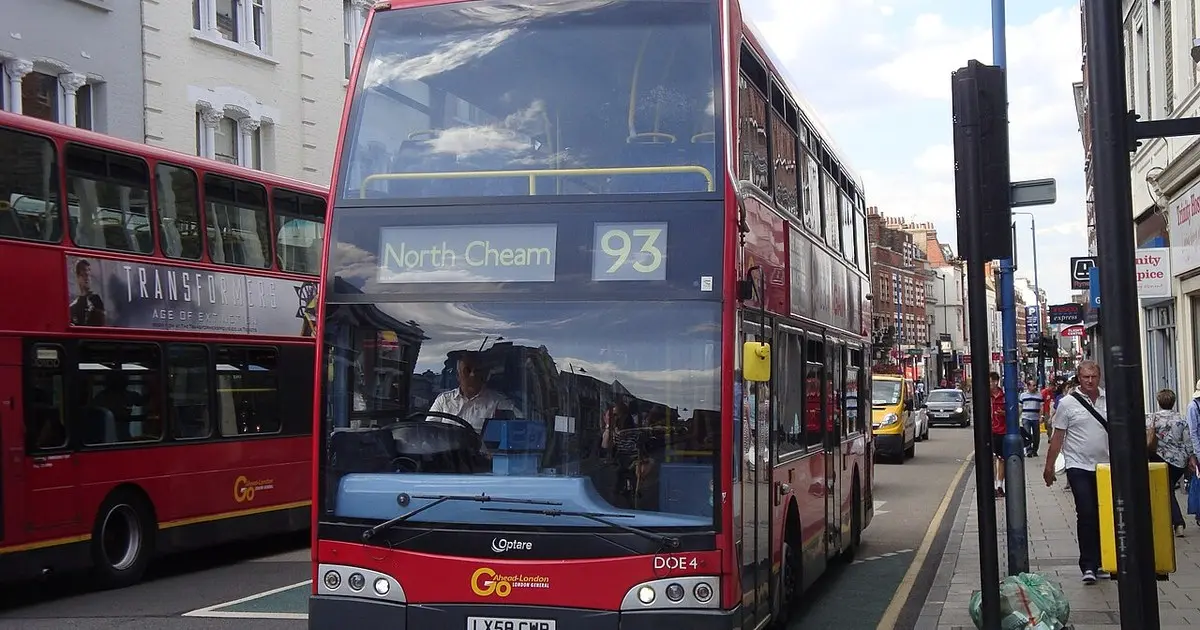
Daytime passengers on Putney’s 93 bus will wait longer from Saturday, even though the Mayor of London promised earlier this year that there would be no reduction in frequency on the route.
From 28 November, between 7am and 7pm, five or six fewer 93s will run in each direction on weekdays, and the gap between buses will grow from about seven minutes to about eight. The buses are not disappearing altogether — they are being moved into the early morning, the evening and overnight — but for people who ride the 93 during the day, the wait is about to get longer.
The route keeps almost all of its buses. Transport for London’s own timetable for after the change shows the same 154 weekday buses heading into Putney as now, and two fewer heading out. At weekends, heading out of Putney, Saturdays lose five daytime buses while Sundays gain six.
It is a change that sits awkwardly with what passengers were told earlier this year. In January, Go-Ahead, London’s largest bus company, walked away from its contract to run the 93 early, along with seven other south London routes, blaming the rise in employers’ national insurance. TfL moved quickly to reassure people. “I can assure you that the 93 and the other bus routes mentioned are safe and their service will be maintained,” it said in a statement sent to Putney’s MP, Fleur Anderson, for residents who had asked about the routes.
In February, the Mayor went further. At a meeting of TfL’s board, which he chairs, board member Ross Garrod — leader of Merton Council — said people were whipping up fear “that these services will be withdrawn or the frequencies will change”, and asked for an assurance that Go-Ahead’s exit would not mean “a reduction in frequency”.
Sadiq Khan gave it. “We’re going to make sure that there isn’t a reduction in frequency. There won’t be services withdrawn,” he told the meeting. TfL’s chief operating officer, Claire Mann, told the same meeting “the customer should see no difference”. The minutes record that board members “were assured that there was no planned reduction in bus frequency or services” as a result of Go-Ahead’s exit.
Nine months later, daytime passengers on the 93 are getting fewer buses. TfL’s stated reason is demand: the changes follow a review of passenger numbers, which found some routes running more buses than they needed. Its commissioner, Andy Lord, has argued the subsidy it pays to run London’s buses has to come down. The Mayor has put that subsidy at more than £1.3 billion.
Go-Ahead will still run the 93, however. Its London General company was the only bidder for the route, and in July it signed a new £10 million contract to run it for seven years. Passengers had no say in the timetable change: TfL does not consult on how often buses run, treating frequency changes as part of its continual review of the network.
The 93 is one of south London’s oldest routes. It has run from Putney Bridge station, along Putney High Street and over the Heath since 1924, carrying on to Wimbledon, Morden and North Cheam. It is a 24-hour service, and the daytime cut is the latest in a run of changes for Putney bus users: earlier this month TfL cut the 424 bus to one every 40 minutes.
The 93 is not the only route changing on Saturday. TfL announced the changes last week alongside revisions to four other south London routes — the 80, 151, 154 and 213 — which are also running less often from 28 November. Of the 213, TfL said the new timetable would better reflect journey times and improve reliability while using the same number of buses.
For Putney passengers, there is also more to come. TfL has still to decide on its plan to take the 74 bus out of Putney altogether, with comments on that proposal having closed on 16 November.
Passengers who want to challenge the 93 change can tell TfL how it affects their journey through its contact form for buses, or take it to London TravelWatch, the official watchdog for London’s transport users. They can also write to Fleur Anderson, MP for Putney, or to Leonie Cooper, the London Assembly member for Merton and Wandsworth, whose job is to hold the Mayor and TfL to account.