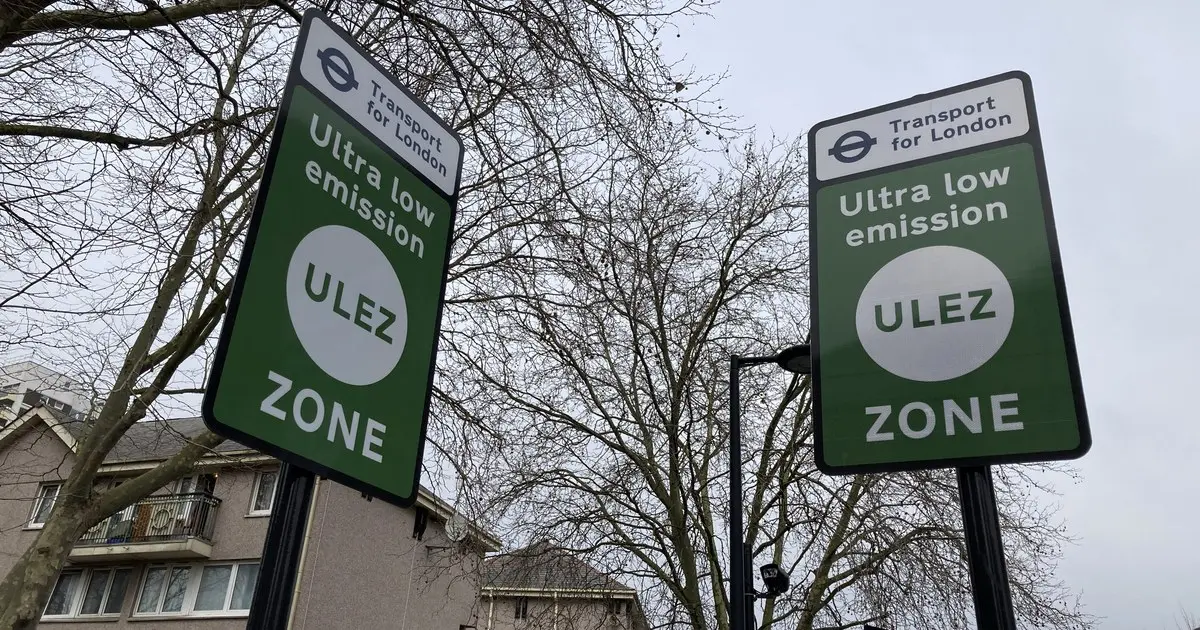
Drivers of imported cars are still paying London’s ultra low emission zone charge even though evidence suggests some of their vehicles may meet the required standard — and Transport for London has refused to refund them.
The dispute turns on paperwork, not pollution. TfL’s system recognises European emissions ratings, so cars built for other markets — Japan in particular — are treated as non-compliant unless their owners can prove otherwise, even where the cars themselves may be clean enough.
Drivers caught by the system have been paying the £12.50 daily charge and receiving penalties for years. Penalties are £90, rising to £180 if paid late.
Nissan wrote to TfL earlier this year with a list of early-2000s models it believed had been caught by the charging system despite meeting the emissions standard. The list included examples such as the Nissan Cube and the Fairlady Z. Other imported models may also be affected.
According to internal TfL documents, the transport authority accepted that Nissan’s evidence was likely to show that the cars met the Euro 4 standard for petrol vehicles. But TfL has said compliance cannot be established from the evidence available and has declined to refund the charges.
That does not amount to a confirmed finding that the cars are compliant. The documents point to an administrative dispute over how compliance is proved, rather than a proven failure on emissions — and the evidence concerns specific models, not every imported car.
TfL says cars built for markets outside Europe are subject to different standards and that compliance must be established through the correct documentation. It also says it has been working with Nissan UK to help owners submit the correct documents for registration.
Owners must still obtain a Certificate of Conformity and complete the supporting paperwork for their individual vehicle. Nissan’s letter does not replace that process.
The Certificate of Conformity route is the one TfL points owners to. Its published guidance says it will accept a vehicle’s registration document, a Certificate of Conformity showing the Euro standard, or a letter from the manufacturer’s homologation or technical department — on headed paper, signed by a named person, giving the registration, the vehicle identification number and the Euro standard. Where no such evidence exists, the car is treated as non-compliant and the charge applies.
No total has been supplied for the number of affected vehicles, the number of drivers who have paid charges, or the total amount paid. TfL’s position is that compliance can only be proved from the moment the necessary evidence is supplied — so charges paid before that point are not refunded.
That no-refund stance is already on the public record. The Local Government and Social Care Ombudsman declined to investigate a complaint from a driver in a similar position — TfL had agreed his vehicle was exempt after he supplied evidence, but refused to refund the charges he had paid before that point. In its published decision (24-004-267), the ombudsman found there was not enough evidence of fault to investigate, noting that TfL’s website makes clear the onus is on the person liable for the charge to provide evidence of an exemption, and that it does not provide refunds.
The unresolved question is one of fairness: whether owners should bear charges for the period before they submitted the correct paperwork, where the vehicle may in fact have met the standard all along.
For cars, the ULEZ requires Euro 4 for petrol vehicles and Euro 6 for diesel. The zone covers every London borough and the City of London. TfL is clear that the charge is enforced on a car’s declared emissions, not its age — a car can be the right age and still be charged if nothing on record shows which standard it was built to.
The dispute has emerged as road charges come under scrutiny ahead of the next mayoral election, with no change announced to the documentation requirement or the refund decision.
Commuters are already facing rising travel costs across the capital — annual Travelcards already run from £1,788 to £3,264 — while TfL is carrying a £6.5 billion repairs backlog.