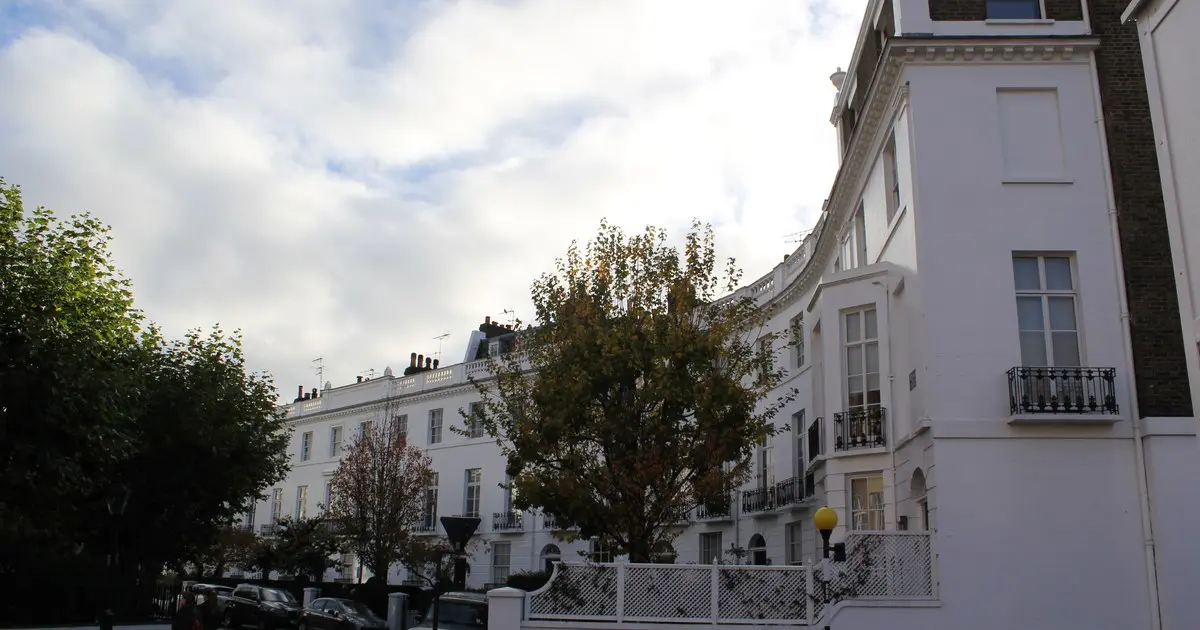
Owners of London homes worth £2 million or more that sit empty for a year will pay double the new “mansion tax” charge, after the Chancellor confirmed the penalty in Wednesday’s Budget. The 100% premium means an empty high-value home will pay twice its normal surcharge band from April 2028 — and because most of England’s £2 million-plus homes are in the capital, London will feel the change more than anywhere else.
The charge itself is the High Value Council Tax Surcharge, announced at the Autumn Budget 2025 on 26 November 2025. It is a new annual charge on owners of residential property in England worth £2 million or more, paid on top of existing council tax. The owner pays it, not the occupier, and it applies in England only. It is due to be legislated for in the Finance Bill 2026-27 and to start in April 2028. It is not yet in force.
At the Budget on 28 October 2026, Chancellor John Healey confirmed the surcharge will go ahead as planned, and confirmed three new design features: a deferral scheme, a series of discounts and exemptions, and the 100% premium on properties left empty and unoccupied for 12 months or more. Full details of how the deferral, discounts and exemptions will work have not yet been published.
What owners will pay
The annual surcharge is set in four bands, based on the property’s value:
- £2 million to £2.5 million: £2,500 a year
- £2.5 million to £3.5 million: £3,500 a year
- £3.5 million to £5 million: £5,000 a year
- £5 million and above: £7,500 a year
Charges will rise with inflation, as measured by the Consumer Prices Index, from 2029/30. Valuation will be based on 2026 values through a separate valuation exercise, rather than the property’s existing council tax band.
To take an illustration from the published bands, rather than a real case: a London home valued at £2.8 million falls in the £2.5 million to £3.5 million band, so its annual charge would be £3,500. If that same home were left empty and unoccupied for 12 months or more, the 100% premium would double the band charge to £7,000 a year. The premium applies to the surcharge band charge; it is not a doubling of the home’s whole council tax bill.
Why the threshold mattered
Before the Budget there were reports that the £2 million threshold could fall to £1.5 million. That did not happen: the threshold is retained. The difference matters because of how many homes each threshold catches. Hamptons estimated that a £1.5 million threshold would have roughly doubled the homes in scope, from about 134,000 to about 271,000 across England.
The London picture
Hamptons estimates that England has just over 138,000 homes worth more than £2 million, concentrated mainly in London and the south-east. Listings data gives a sharper picture of the capital’s share. Rightmove listings data, analysed by Yopa on 6 October 2026, found that of 11,848 homes listed above £2 million across England, 6,963 — 59% — were in London, equal to 5.8% of all London listings. At a £1.5 million threshold, the London count would have been 11,316, or 9.4% of London listings — so keeping the threshold at £2 million spared a further 4,353 London homes from scope.
Those Rightmove and Yopa figures describe homes listed for sale, not the total housing stock, and should not be confused with the Hamptons stock estimate. No London borough-by-borough breakdown of affected homes has been verified, so this article does not claim one.
What it raises, and what is still unknown
The Office for Budget Responsibility estimates the surcharge will raise annual receipts of about £400 million. The government says fewer than 1% of England’s residential properties will be affected.
Plenty is still unpublished. How the deferral scheme will work, who qualifies for the discounts and exemptions, and how the empty-homes premium will be assessed in practice have not yet been set out in full. The premium itself applies from April 2028, alongside the surcharge; no separate earlier start date for the premium has been confirmed.
The empty-homes premium was one of several housing measures in the Budget. The same Budget set out a 2.5% deposit scheme for first-time buyers, and gave mayors new tax powers tied to projects including the Bakerloo line extension. It also carved vape shops out of business rates relief.