Two homes just three miles apart in Bexley and Sidcup were targeted by burglars within the space of a week, with the glass in rear doors smashed in both cases.
The first incident happened in Cold Blow Crescent, Bexley, on October 23. At around 6.46pm, residents heard a loud noise and smashing glass coming from their kitchen. When they went to look, they found the glass panel in the rear door broken.
CCTV showed a man breaking the glass before fleeing when the resident screamed. A nearby police dog unit tried to track the suspect but lost the trail at the A2.
In a separate incident, a property in Wren Road, Sidcup, was burgled at some point between October 19 and 27. The residents returned from holiday to find the lower glass panel of their rear door smashed.
The burglars reportedly searched two bedrooms in the Sidcup home, but it is unclear whether anything was taken.
The two incidents have been reported as separate cases in the same part of south-east London in the same week. Nothing published so far suggests they were carried out by the same offender, and police have not said the cases are linked.
Both break-ins followed a familiar pattern for residential burglary: entry through the back of the property, out of sight from the street, by smashing a glass panel in the rear door. Rear doors are a common weak point because they are less visible to neighbours and passers-by than the front of a house, and a smashed panel can let an intruder reach through to unlock a door from the inside.
Police crime-prevention advice for householders typically includes fitting doors with strong locks, considering laminated or toughened glass for glazed panels, keeping back gardens and side passages well lit, and making sure alarms and outdoor lighting are in working order. Leaving a home looking occupied while away on holiday, for example by asking a neighbour to keep an eye on the property, is also commonly recommended.
Residents who hear glass breaking or see someone acting suspiciously around a neighbour’s home are advised to call police rather than approach the person themselves, as happened in the Bexley case, where the intruder fled as soon as the resident screamed.
Bexley and Sidcup sit in the same south-east London borough, a largely residential area of suburban streets where many homes back onto gardens that are not overlooked from the road. That layout is part of everyday life in the area, but it also means a break-in at the rear of a property can go unnoticed until the occupants return, as the Sidcup family discovered after their holiday.
Against that local picture, the Metropolitan Police have noted a decrease in local crimes such as burglary, robbery and theft, with “neighbourhood crime” down 14 per cent. The force says it now arrests more than 1,000 extra criminals each month. Those are general Metropolitan Police figures, not figures specific to Bexley, and they sit alongside the two recent incidents as a reminder that burglary remains a risk even where overall numbers are falling.
After a break-in, police advise householders not to disturb the scene more than necessary before officers arrive, so that evidence such as fingerprints or CCTV can be preserved. If an intruder is still believed to be inside, residents should leave the property and call 999 rather than confronting them. In the Bexley case, the trail went cold at the A2, a busy dual carriageway where a scent trail is much harder for a dog unit to follow, which shows how quickly an intruder who reaches a main road can disappear.
Anyone with information about either incident should contact police on 101.
Read more: Teenager left with serious injuries after stabbing in east London street and Two men shot near O2 Academy Islington, one with life-changing injuries.
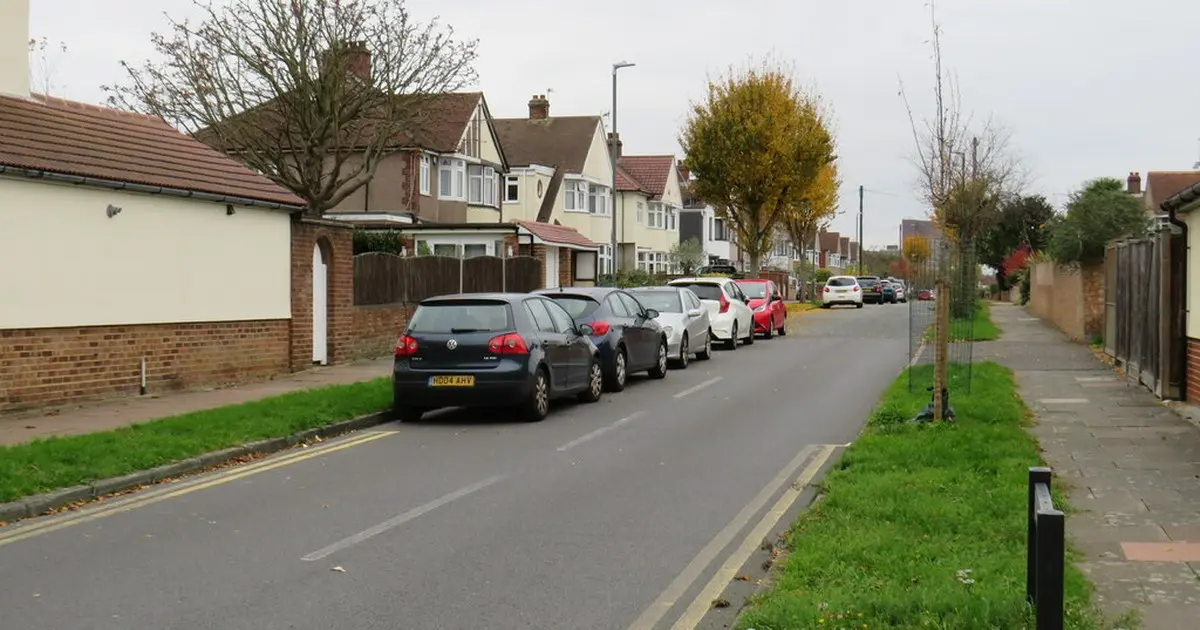
Image: A residential street near Sidcup (library photo, Wikimedia Commons).