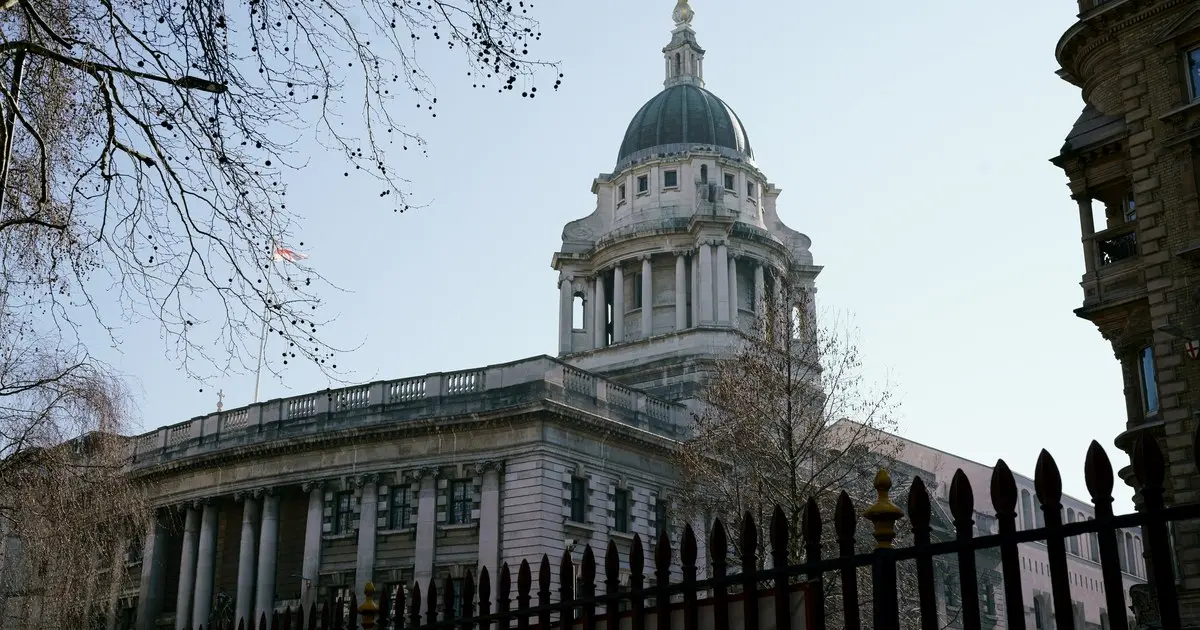
A junior member of the Royal Navy has appeared at the Old Bailey charged under the National Security Act over allegations he collected secret information and researched a website linked to Russia’s foreign intelligence service.
Teddy Young, aged 24, appeared by video link from Belmarsh prison at London’s Central Criminal Court on Friday. His role in the Royal Navy related to “warfare intelligence”, prosecutors told the court at his first appearance earlier this month.
Prosecutor Kelly Brocklehurst told the Old Bailey that Young is charged with having “obtained, copied, recorded or retained protected information” between November 2024 and May 2025.
She said the 24-year-old was allegedly “interested in a website set up by a foreign intelligence service”. “The website that he appears to have taken a particular interest in is the foreign intelligence service of Russia, the SVR,” Brocklehurst added.
Young faces five charges in total, including two under the National Security Act and one count of misconduct in public office. He was not asked to enter any pleas at Friday’s hearing.
His trial has been provisionally listed to begin in October 2027. The charges are not connected to the recent, ongoing investigation into an incident at the RAF Fairford airbase, police have previously said.
The SVR is Russia’s foreign intelligence service, responsible for gathering intelligence abroad. The prosecutor’s reference to the service at Friday’s hearing underlines why the alleged conduct is being dealt with under national security legislation rather than as a routine criminal matter.
National Security Act offences
The National Security Act 2023 overhauled Britain’s laws against hostile state activity, replacing parts of the century-old Official Secrets Acts. It introduced new offences including obtaining or disclosing “protected information” — material restricted for national security reasons — where a person knows or ought reasonably to know their conduct would help a foreign power.
The Act also created the offence of “preparatory conduct” in relation to acts endangering the UK’s safety or interests, and updated the criminal tools available to the security services and police. Convictions under the Act’s most serious offences can carry lengthy prison terms.
The Old Bailey, formally the Central Criminal Court of England and Wales, is where the country’s most serious criminal cases are tried. Terrorism and national security cases are routinely heard there, with trials often listed years in advance because of their complexity.
Misconduct in public office
Alongside the National Security Act counts, Young faces one count of misconduct in public office — a long-standing common law offence that applies to people carrying out a public role who are accused of seriously failing in the duties of that role. The offence is separate from the newer security legislation and is often charged where a public official is accused of abusing a position of trust.
The full detail of the five charges, and the evidence behind them, will be set out as the case moves towards trial.
What happens next
The provisional trial date of October 2027 reflects the long preparation needed for cases involving protected information, which may require special courtroom arrangements to handle sensitive material.
Young remains in custody at HMP Belmarsh in south-east London, where he appeared by video link on Friday. Video-link appearances from custody have become routine at the Old Bailey and other crown courts, allowing prisoners to attend case-management hearings without being transported across the capital.
He was not asked to enter a plea at this stage. Pleas are typically taken at a later hearing once the defence has had full sight of the prosecution’s evidence. The investigation is ongoing, and prosecutors are expected to set out the full extent of the case in the months ahead.
Read more: tunnel gang jailed for ten years after Met foils Tooting jewellery heist, and gun network shut down following Met investigation.