Eurostar trains could start calling at Stratford International within four years under a £20 million plan being championed by the Mayor of London.
Sadiq Khan is pressing the government to back a new cross-Channel stop at the east London station, with funding channelled through a proposed Business Rate Retention Zone (BRRZ). The mechanism would let London hold on to a bigger share of its business rates and invest the money directly in the project.
City Hall blueprints suggest as many as one in three trains crossing the Channel could stop at Stratford once the station is running. At present, services bound for Paris, Brussels and Amsterdam set off from St Pancras International and do not stop again until they reach continental Europe.
The Mayor has said he believes the scheme is close to getting “over the line”, with talks between City Hall and ministers described as “very positive”. Chancellor John Healey is expected to back a funding package for rail schemes championed by Khan, and an announcement could come in his Budget on October 28 — although Treasury insiders stress no final decision has been taken.
Under the current thinking, the stop could open in 2030 at a cost of up to £20 million. Supporters argue it would be a major boost for east London, with estimates suggesting the station could generate as much as £3 billion in value over 60 years while encouraging firms to base their UK operations in the area. Businesses including Unibail-Rodamco-Westfield, which runs the giant shopping centre next to the station, are behind the idea.
International platforms, waiting for their trains
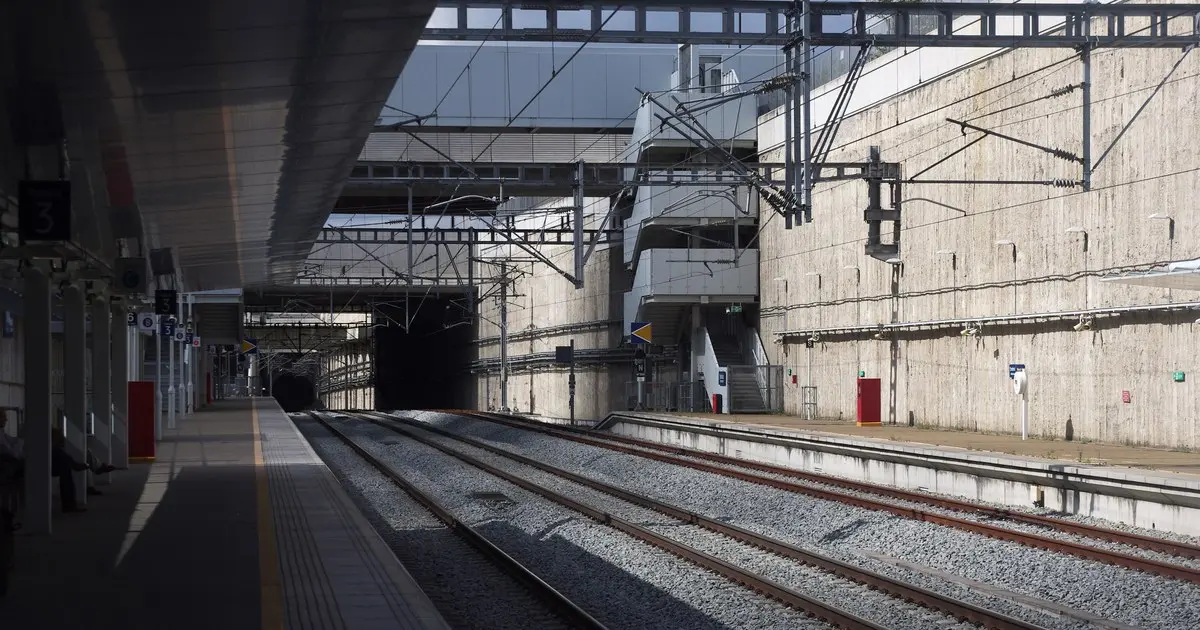
There is a certain irony to the proposal. Stratford International was built with Eurostar in mind when the High Speed 1 line opened in 2009, but cross-Channel services have never regularly called there — the international platforms have stood effectively unused by continental trains.
The case for changing that now rests on two things: demand and regeneration. East London’s growth since the 2012 Olympics has been dramatic, with Stratford becoming one of the capital’s busiest interchange hubs. Putting international services back into the mix, the Mayor’s team argues, would spread the benefits of the high-speed line beyond central London and give east London a direct link to Europe.
What is a Business Rate Retention Zone?
A BRRZ is a funding tool that allows a defined area to keep a larger proportion of the business rates collected there, rather than passing them to central government. The retained income is then earmarked for infrastructure projects that are expected to drive further growth — in this case, the station works.
It is a model ministers have warmed to for unlocking projects that struggle to secure conventional capital funding, and Khan’s team believes it offers a route to delivering the station without asking taxpayers elsewhere to foot the whole bill.
The timing matters. With the Chancellor’s Budget days away and rail capacity under the spotlight — a full weekend closure of the M25 near Heathrow is set to test road links to London’s biggest airport this Saturday — supporters say the case for expanding London’s international rail capacity is hard to ignore.
London’s wider transport offer is also growing. The SL7 express bus now runs 23 miles between West Croydon and Heathrow Central for a £1.75 single fare, showing how the capital’s international connections are being strengthened on multiple fronts.
Any decision will ultimately rest with the Treasury, and nothing is confirmed. But with City Hall, the Chancellor and some of the country’s biggest property investors all rowing in the same direction, Stratford’s long-dormant international platforms may finally get the trains they were built for.
Stratford International station, which could gain cross-Channel services under the plan (Photo: Matt Buck / Wikimedia Commons, CC BY-SA 3.0).