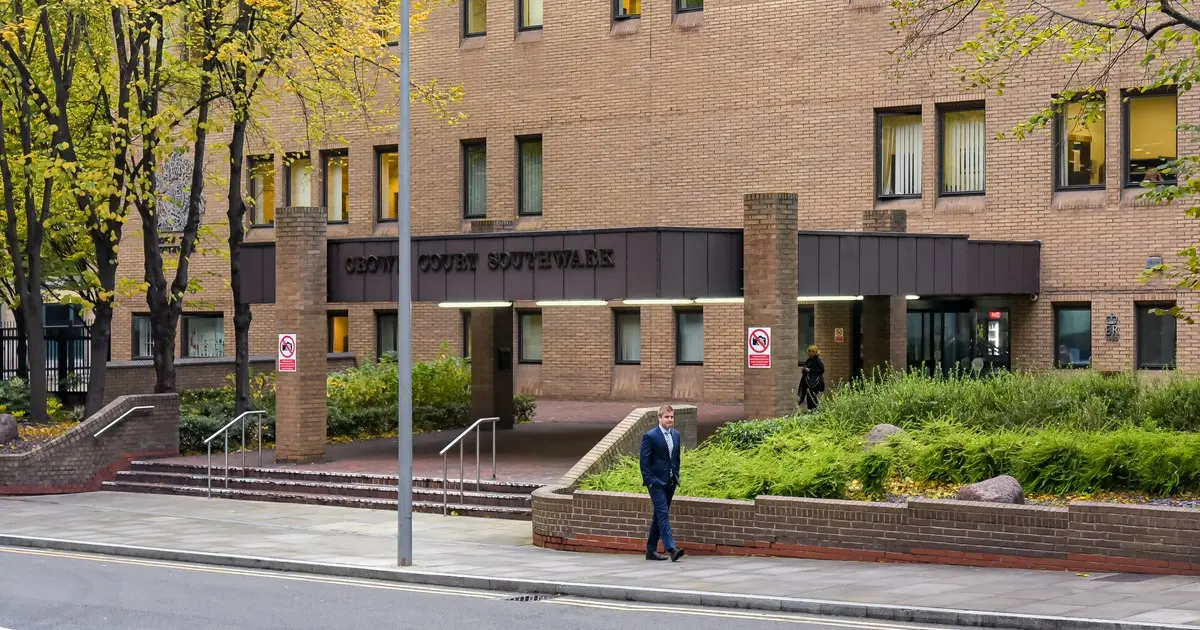
Southwark Crown Court (Jorge Franganillo, CC BY 2.0, via Wikimedia Commons).
A complainant has given evidence on the second day of Russell Brand’s trial at Southwark Crown Court, telling the jury she felt “degraded” and “like a piece of meat” after what she alleges was a non-consensual encounter at the comedian’s home in 2009.
The woman, who cannot be identified for legal reasons, gave her account of events that she said followed a comedy show at the Hammersmith Apollo. The 51-year-old comedian and actor faces three counts of rape, three counts of sexual assault and one allegation of indecent assault involving six women. He denies all of the charges.
The court heard that the pair had engaged in a consensual encounter backstage before later agreeing to meet at Brand’s home in Hampstead, where she told police she had expected they would have consensual sex.
She alleged, however, that the encounter became non-consensual. In evidence, she told police she felt “completely degraded and like I’d been treated like an animal, like a piece of meat”, describing her response to Brand as “horrible”.
The jury was also shown text messages said to have been exchanged after the incident. In one, Brand is reported to have written: “Because you are dirty and I want to push you further.” She replied: “I think you’ve pushed me far enough. You treated me like an animal.”
What the defence is expected to argue
Brand is expected to tell the jury that all of the encounters were consensual, and that the complainants have since “reimagined” what happened. That framing is likely to be the central fault line of the trial: the prosecution arguing that consent was absent, and the defence insisting it was present throughout.
Cases of this kind often turn on how jurors weigh the competing accounts of what happened in private, and on the surrounding evidence — including contemporaneous messages and what each complainant told others at the time. The text exchange shown to the jury is one such piece of surrounding evidence, and its interpretation will be fought over in the days to come.
How a trial like this proceeds
With six complainants and allegations spanning several years, the trial is expected to be a lengthy one. After the prosecution sets out its case and calls its witnesses, each complainant will be cross-examined by the defence — a process in which their account will be tested in detail. Brand is not required to give evidence himself, though if he does take the stand he will also face cross-examination.
The jury has been reminded throughout that the burden of proof rests with the prosecution: it must prove each charge beyond reasonable doubt. The judge will give the jury detailed legal directions at the end of the evidence, including on how to approach the question of consent and on the passage of time between the alleged offences and the trial.
Historic allegations of this type are not unusual in the criminal courts. The Crown Prosecution Service regularly brings cases many years after the events in question, often after investigations prompted by later reports or by complainants coming forward independently of one another. Delays can create difficulties for both sides — memories fade and records disappear — which is why the jury’s assessment of the witnesses is so central.
Anonymity and reporting restrictions
Southwark Crown Court has seen a succession of high-profile proceedings in recent weeks. London Streets has been covering the Brand trial since it opened on 19 October, when the jury heard the charges set out for the first time. The court is also the venue for the Tommy Robinson trial, another case drawing significant public attention.
Complainants in sexual offence cases have lifelong anonymity under the law, and strict reporting restrictions apply to the proceedings. The trial continues.