


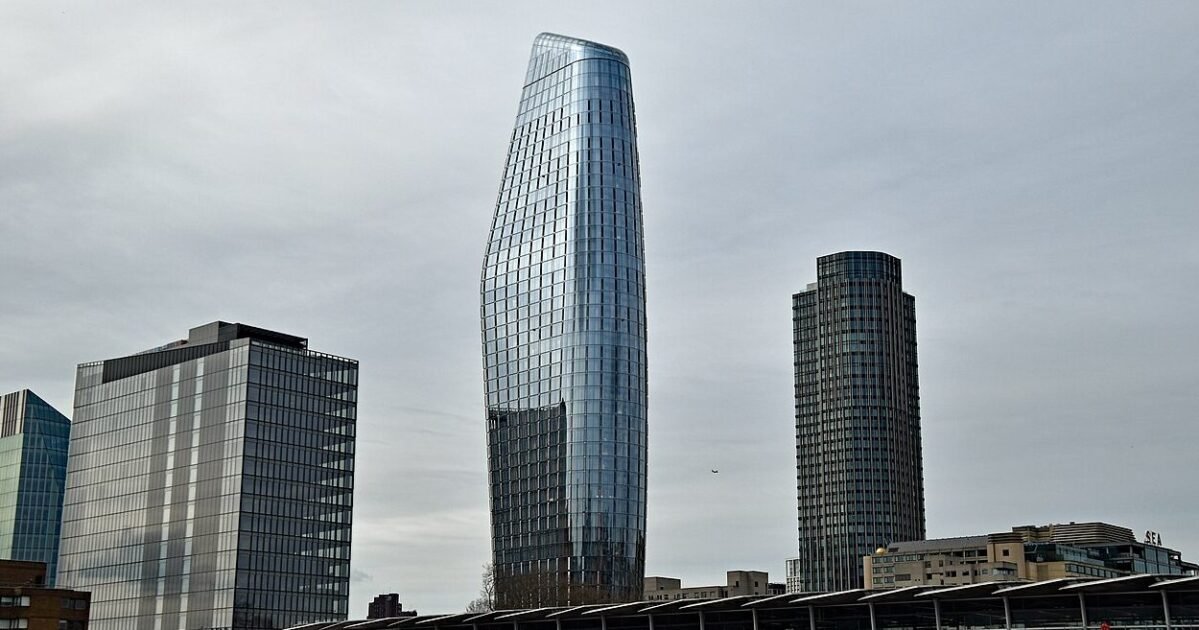
Two window cleaners have been brought safely to the ground after their cleaning cradle malfunctioned high on the side of One Blackfriars in Southwark, leaving them stranded at the 15th floor on Thursday evening.
London Fire Brigade said crews were called at 5.22pm on 8 October to a building on Blackfriars Road, where the pair had become trapped in the suspended platform outside the tower. Firefighters from Dowgate were sent to the scene alongside a 64-metre turntable ladder from Old Kent Road, and the incident was brought under control by 6.15pm.
What happened on Thursday evening
The alarm was raised shortly after 5.20pm, at a time when the south bank around Blackfriars is still busy with commuters heading for the station and people crossing the river. According to the Brigade, the two men were working in a window cleaning cradle on the 15th floor when the platform malfunctioned, leaving them unable to continue their descent.
Crews used the 64-metre turntable ladder to reach the men where they were waiting, before bringing them down to ground level. Both were then assessed at the scene by London Ambulance Service crews. In a short statement, a London Fire Brigade spokesperson said: “Thankfully no-one was hurt and the men were rescued safely and quickly.” The Brigade added that the rescue showed how its specialist equipment is used to deal with the particular challenges presented by London’s tall buildings. You can read the Brigade’s own incident update on its official incident page.
There were no reports of injuries, and no suggestion that anyone inside the building was affected. The cause of the cradle malfunction has not been confirmed, and the Brigade has not released any further details about the two men.
How a 64-metre turntable ladder rescue works
The appliance sent from Old Kent Road is not an ordinary fire engine ladder. London Fire Brigade describes its 64-metre turntable ladder as the tallest aerial appliance in Europe. It is designed to reach up to around 20 floors, which meant the 15th floor at One Blackfriars was comfortably within its operating range, even allowing for the need to position the vehicle on the road below and angle the ladder towards the face of the building.
In a rescue of this kind, the priority is to get a stable platform alongside the people who are stranded. Once the ladder is in position next to the cradle, firefighters can secure those on board and transfer them across to the ladder’s platform or cage, before lowering them in a controlled descent. The Brigade notes that this type of ladder also features an onboard lift that can be used for mass casualty rescue where conditions are suitable, underlining that it is designed for moving people, not just equipment.
The same appliance has other roles at an incident. The Brigade says its turntable ladders can be used to deliver water to height during a fire, and as an observation platform, giving incident commanders a clearer view of how a situation is developing across a wide area. It is the same class of specialist ladder London Streets has reported on before, when London’s tallest fire ladder was used in a rescue in West Hampstead, and it reflects how often high-rise working now features in the Brigade’s callouts. A very different kind of height rescue on the river was seen when emergency crews responded to a climber at Tower Bridge earlier this year.
The building in the spotlight
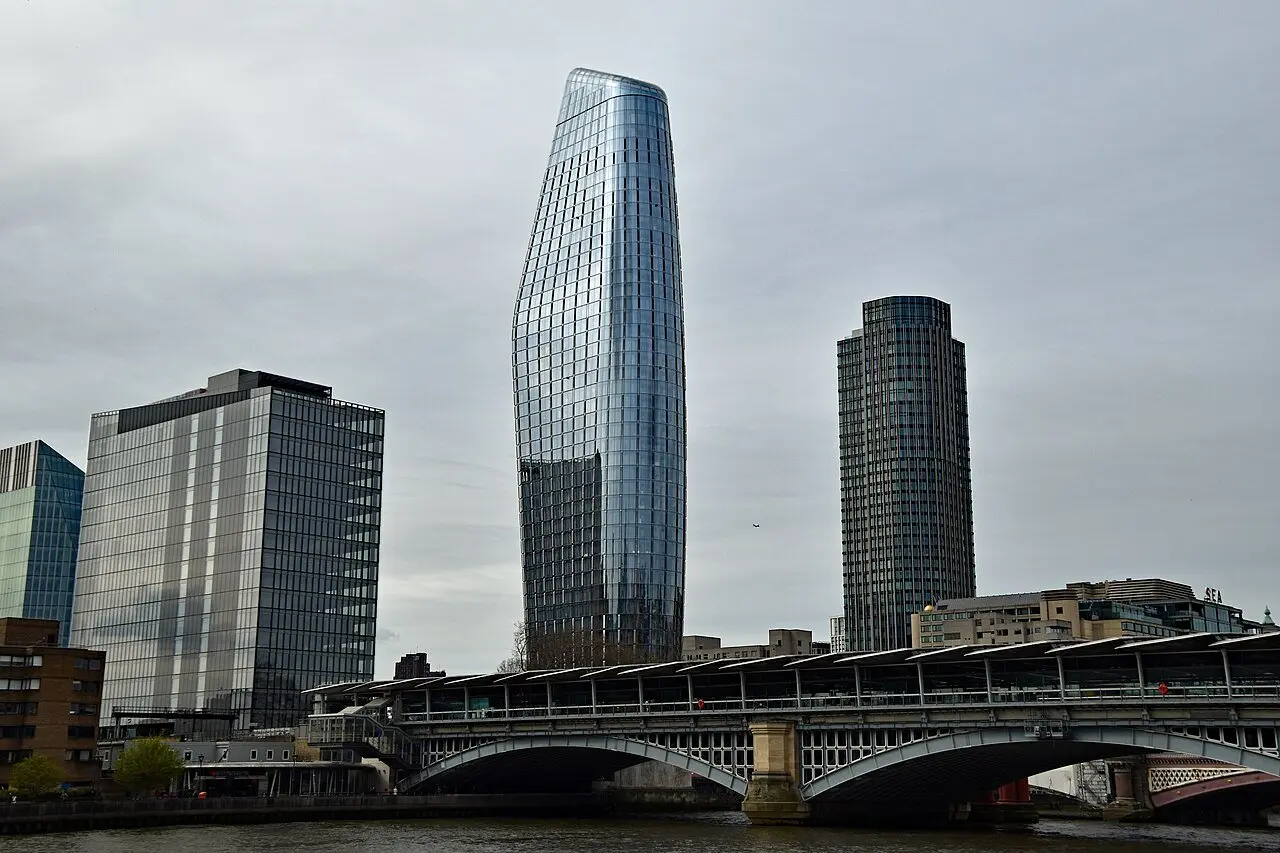
One Blackfriars stands at No. 1 Blackfriars Road, at the southern end of Blackfriars Bridge on the Bankside side of the Thames. Completed in 2018, the mixed-use tower rises to 50 storeys and stands about 166 metres tall, making it one of the most recognisable residential towers on the south bank. Its curved, tapering shape has earned it the informal nicknames “The Vase” and “The Boomerang” among Londoners.
That height is also what makes routine work on the outside of the building such a specialist job. Window cleaning on a tower of this scale is normally carried out from suspended cradles that move slowly down the facade, floor by floor. When that equipment works as intended, few people on the street below even notice it. When it stops working, as it did on Thursday, the workers on board have very few options other than to wait for help, which is why the response from the Brigade was built around getting a ladder to them as quickly as possible.
The area around the tower is one of the busiest parts of Southwark, sitting between Blackfriars station, the river and the routes towards Waterloo. Readers who travel through the area may also want to note the planned night-time closures affecting Waterloo Bridge and the Waterloo area this month, which are separate from Thursday’s incident but affect many of the same journeys.
Brought down safely, with no injuries reported
By 6.15pm, less than an hour after the first call, the Brigade said the incident was under control. Both men had been reached, brought down and handed over for assessment by paramedics at the scene, and the spokesperson’s message was clear that no-one had been hurt.
For the two window cleaners, it will have been an uncomfortable wait, suspended 15 floors above Blackfriars Road as the evening rush got under way below them. For the crews involved, it was a textbook use of equipment that London increasingly relies on as its skyline grows taller: the right ladder, in the right place, with enough reach to solve a problem that would otherwise have been far harder to resolve.
London Fire Brigade has not said whether any follow-up work will be carried out on the cradle itself, which would normally be a matter for the building’s management and the company responsible for the equipment. London Streets will update this story if further details are released.