


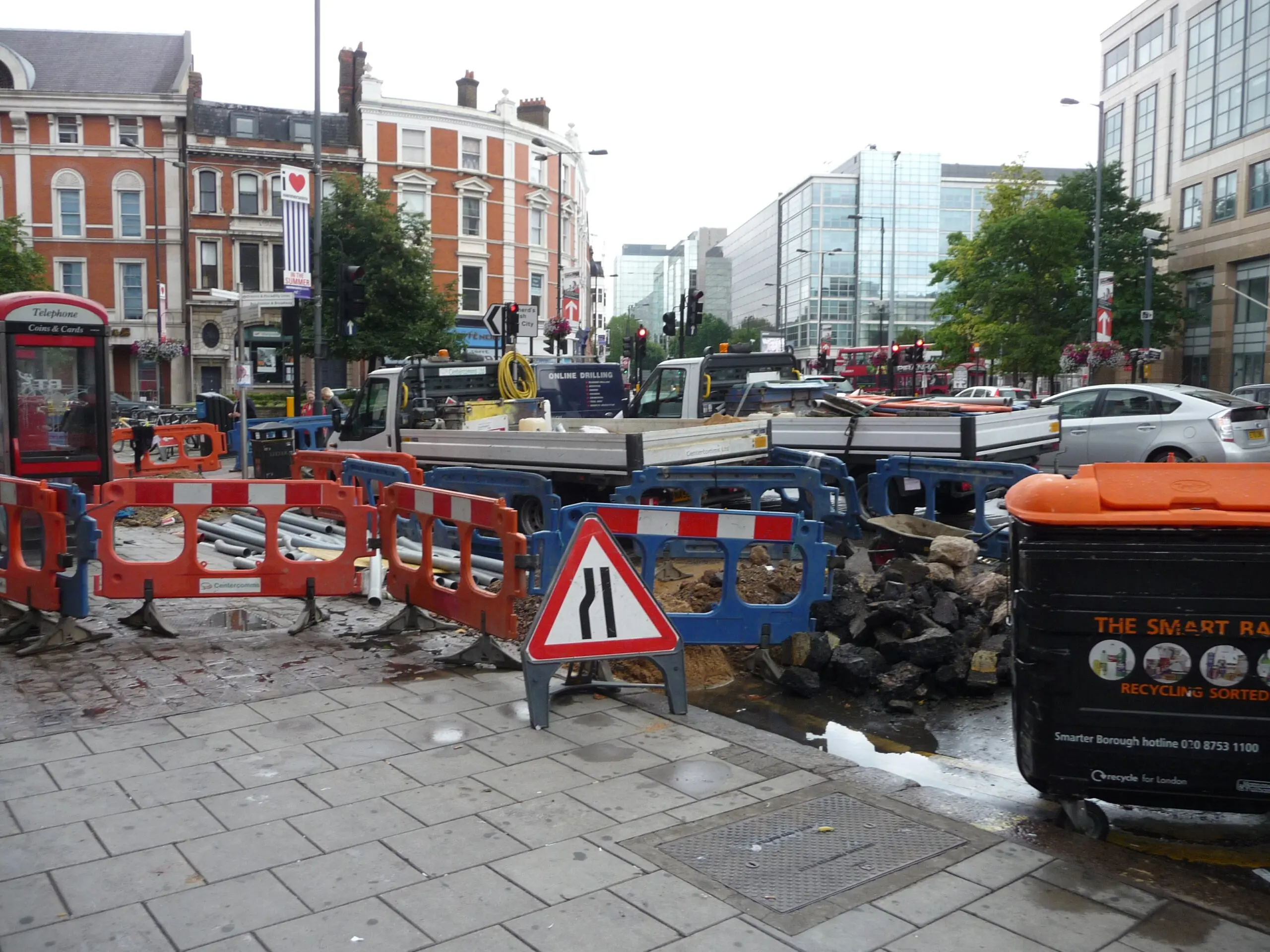
Utility companies that dig up Hammersmith and Fulham’s busiest roads during the morning and evening rush will face new charges from today, as the council brings in rules designed to cut the congestion caused by peak-time roadworks.
Under the scheme, which came into force on Monday 5 October, firms – and the contractors they hire – are expected to keep clear of the borough’s main traffic routes at the busiest times of day. Those that still occupy the road during peak periods will be charged, giving them a direct financial reason to plan works better and get them finished faster.
The council says the move should mean fewer lane closures and diversions on the routes that matter most, easing journeys for residents and local businesses while also helping to improve air quality. With works better managed, pavements and pedestrian crossing points should stay clearer and safer too.
Cash raised through the charges will be ploughed straight back into the borough’s roads. According to Hammersmith & Fulham Council, the money will help pay for pothole repairs and fund new technology aimed at cutting traffic.
Cllr Nicole Trehy, the council’s cabinet member for climate emergency and travel, said local people were fed up with seeing road closures and long queues caused by works taking place on the busiest roads at the busiest times. Utility firms and contractors that hold up traffic at peak times for longer than strictly necessary will now be penalised, she said, urging them to work “smarter and more efficiently”. Residents and businesses, she added, should not have to spend so much of their day stuck in traffic – and she wants safer conditions for people walking and cycling to schools and workplaces.
Part of a London-wide shift
Hammersmith and Fulham is far from the first to take this approach. Transport for London has run a similar charging scheme across almost 70 per cent of the roads it looks after since 2012, and most London boroughs now operate their own versions. The thinking is simple: make it expensive to block key routes when they are needed most, and the people doing the digging will find ways to avoid it.
The timing is telling. Congestion remains one of the capital’s most stubborn problems – bus speeds in London have fallen to their lowest level since 2013-14 as passenger journeys decline, a sign of how badly traffic can drag the city down. And roadworks disruption is rarely out of the headlines for long: drivers in north London are facing two years of delays while the £10.8 million Brent Cross flyover repair programme runs its course, while the £67.4 million overhaul of Gallows Corner only fully reopened after months of misery for motorists.
Charging to keep London moving
Using charges to manage pressure on busy roads is becoming an increasingly familiar tool in the capital. Drivers using the Silvertown and Blackwall tunnels have seen tolls rise under inflation-linked increases brought in by TfL, part of a wider effort to manage demand on the city’s river crossings.
For now, the council says it is working directly with utility companies to reduce lane closures and diversions, rather than simply reaching for the fine book. The message to firms is clear: plan around the rush hour, work efficiently, keep the borough moving – or pay the price.
Whether the new charges succeed in clearing the borough’s peak-time roads will become clear in the coming months. But with the money raised earmarked for potholes and traffic-busting technology, the council is betting that even the firms paying up will, indirectly, be helping to fix the problem. For drivers, the practical promise is straightforward: fewer cones and closed lanes on the school run and the journey home, at the very times the network is under most strain.