


The Reverend Bernd Koschland MBE, who arrived in Britain alone as a young boy on the Kindertransport and devoted his later life to teaching children about the Holocaust, has died.
Koschland was a minister, a teacher and a long-standing member of the Association of Jewish Refugees (AJR). He reached Britain in 1939 after escaping Nazi Germany, sent to safety at the age of eight while his parents remained behind.
Born in the German town of Fürth in 1931, his early childhood was shattered by the rise of the Nazis. As a small boy he witnessed Kristallnacht, the night of orchestrated attacks on Jewish people, homes and businesses across Germany, during which his father was arrested and taken to the Dachau concentration camp.
He was then sent to Britain alone through the Kindertransport rescue operation. His sister Ruth also managed to escape, but their parents did not survive the Holocaust.
After the war he built a new life in Britain, working as a minister and a teacher. But it was in retirement that he found the calling for which he would become best known: travelling to schools to share his own story with pupils face to face. He spoke not in abstractions but in the concrete detail of a child’s memory — the train journey, the bewildering arrival in a strange country, the family left behind. His talks gave children a direct human link to events that can feel distant on the page, and he became a familiar and much-loved figure in classrooms.
His contribution to keeping those memories alive was formally recognised in 2018, when he was appointed MBE for services to Holocaust education.
The AJR has led the tributes. Its chief executive, Michael Newman OBE, described Koschland as a treasured member of the organisation’s community and a passionate educator who understood how vital it is to pass memory from one generation to the next. Newman said he gave his time generously, sharing his testimony in a way that moved everyone who heard it, and offered the organisation’s deepest condolences to his family. The organisation said it would remain deeply grateful for all he had given to its work and to Holocaust education, and extended its heartfelt sympathy to his family.
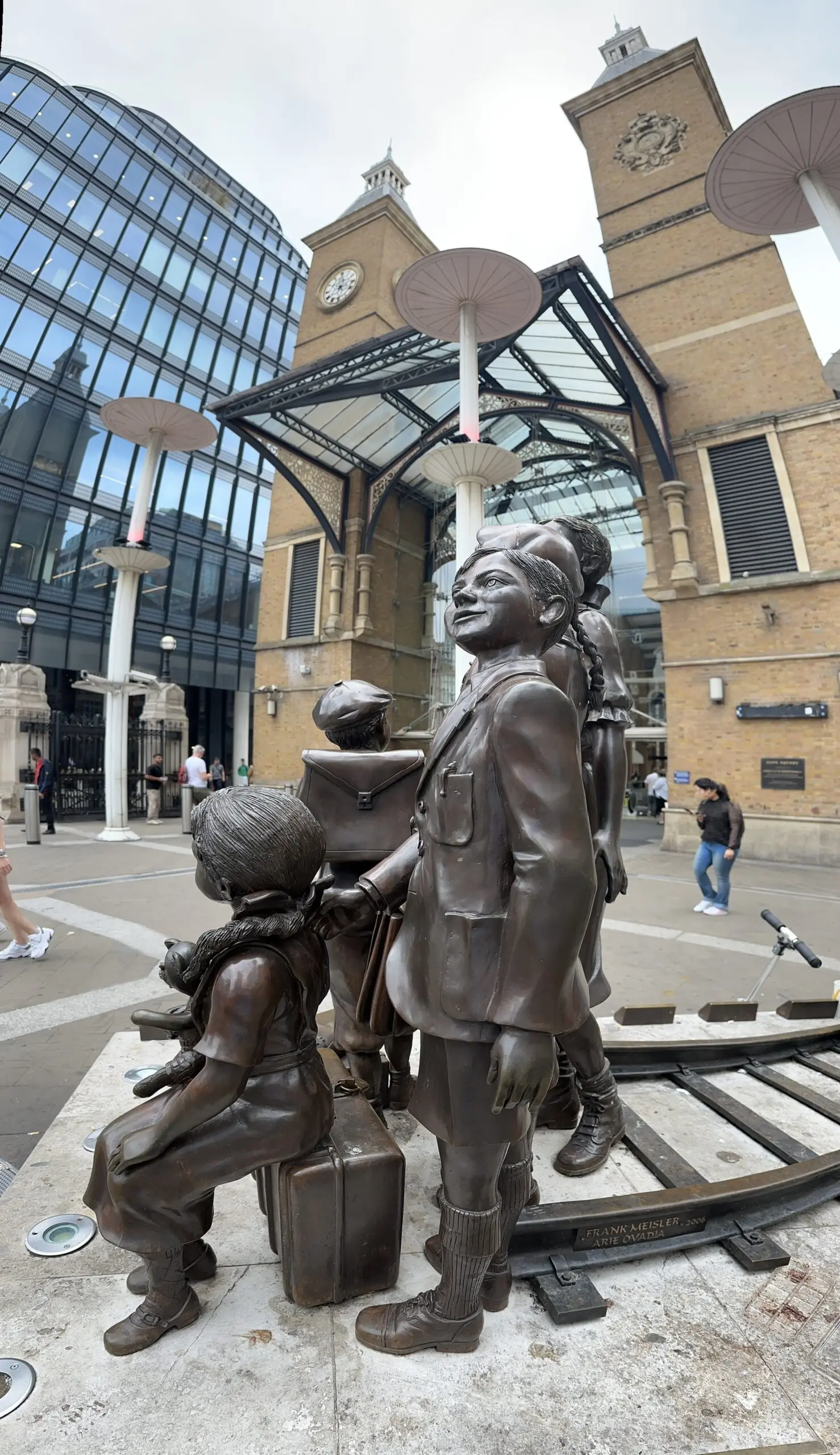
Koschland was one of around 10,000 predominantly Jewish children rescued by the Kindertransport between late 1938 and the outbreak of the Second World War. After Kristallnacht, British Jewish organisations, churches, charities and ordinary households pressed the government to act, and the children travelled by train and ferry — many arriving at Harwich before continuing to Liverpool Street station — to be placed with foster families, in hostels and at schools across the country. The great majority never saw their parents again.
His death underlines how precious first-hand testimony has become. With the number of Holocaust survivors now very small, educators and organisations such as the AJR have worked to preserve their accounts so that young people can still encounter history through the voices of those who lived it. Programmes that bring survivors and refugees into classrooms have become one of the most powerful tools in Holocaust education. In Britain, Holocaust Memorial Day is observed every year on 27 January, and remembrance work in London’s schools — from classroom visits to commemorative events — continues to carry that mission forward.
For the pupils who heard him speak, and for the refugee community he served for so long, his legacy is a simple one: that memory, honestly shared, can teach each new generation what must never be allowed to happen again. His story, like those of so many who came to Britain on the Kindertransport, is a reminder of both the cruelty he fled and the compassion that gave him refuge.