


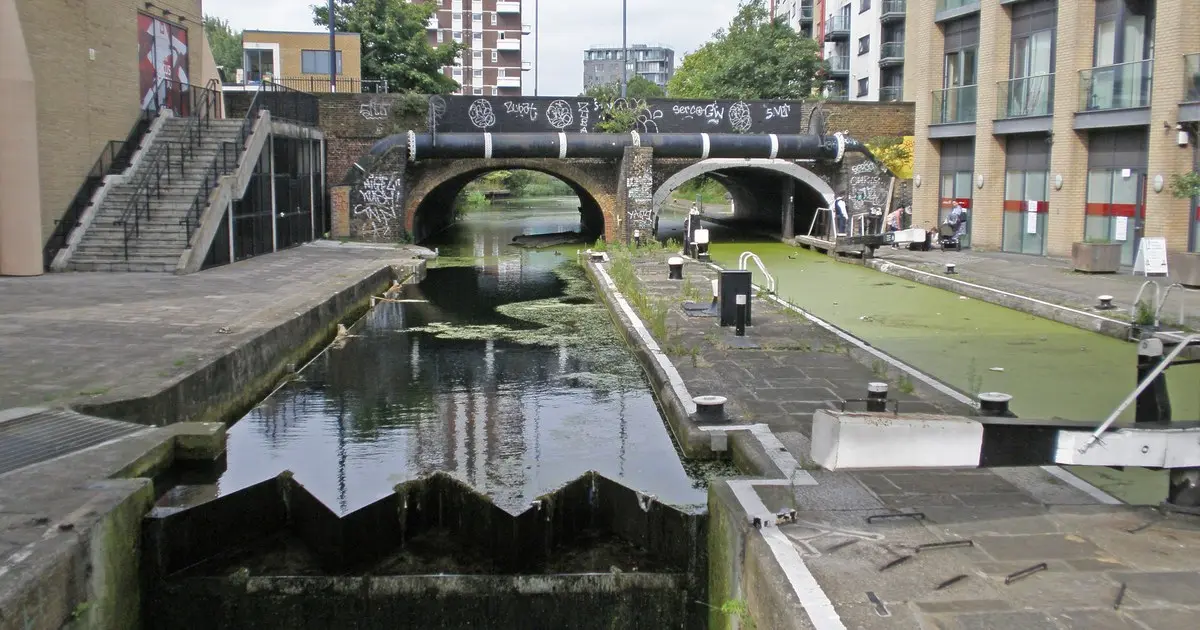
Police have seized a hidden stash of drugs from behind benches by a canal in Tower Hamlets, and arrested two men on suspicion of drug supply offences in a separate incident nearby.
The discovery was made by St Dunstan Safer Neighbourhood Team officers during a joint operation with Tower Hamlets Enforcement Officers and a drugs detection dog. The operation targeted known hotspots for drug dealing and anti-social behaviour.
Stash found behind benches
A Metropolitan Police spokesperson said: “During patrols of Grand Union Place, officers discovered a concealed stash containing a significant quantity of Class B drugs hidden behind benches near the canal.”
“The drugs were seized and removed from the location,” the spokesperson added, saying: “Officers will conduct similar type of joint operation on regular basis.”
The force has not said exactly what the Class B drugs were, or how much was recovered — describing it only as a significant quantity.
Two arrested in separate incident
In a separate incident, plain-clothes officers identified a suspicious vehicle near Sandalwood Close, E1.
A search of the vehicle recovered drugs, a baseball bat, and a mobile phone believed to be linked to drug supply activity.
Two men were arrested on suspicion of offences including possession of drugs, possession of an offensive weapon, and being concerned in the supply of Class A drugs. Their names and ages have not been released.
Ongoing crackdown
The operation is part of stepped-up efforts to tackle drug crime and anti-social behaviour in parts of Tower Hamlets. Joint patrols between neighbourhood police teams and council enforcement officers — backed by drugs detection dogs — have become a regular feature of the crackdown, with officers saying more of the same is planned.
Canal towpaths and quiet residential streets are the kind of secluded spots used to stash supplies away from main roads. Stepney has been in the news recently over major local developments, and police say keeping the area safe remains a priority.
The teams behind the operation
The St Dunstan Safer Neighbourhood Team is the local policing team covering the St Dunstan’s ward of Tower Hamlets. Safer Neighbourhood Teams are the Met’s ward-level units — the officers residents are most likely to see on foot patrol, and the first point of contact for persistent local problems like street dealing and anti-social behaviour.
Tower Hamlets Enforcement Officers, meanwhile, are the council’s own uniformed patrol force. They work alongside the police on issues that cross the line between council and police responsibility — environmental crime, street drinking, rough sleeping and the kind of low-level disorder that often clusters around drug markets.
Pairing the two with a drugs detection dog is a deliberate tactic: the dog can find stashes concealed in benches, brickwork and undergrowth that officers walking past would never spot.
Class A and Class B — what the labels mean
The two incidents involve different drug classifications, and the distinction matters in law.
Class B drugs include cannabis, ketamine and amphetamines. Possession of a Class B drug carries up to five years in prison; supplying or producing it carries up to 14 years.
Class A drugs — the category behind the “concerned in the supply” suspicion — include cocaine, heroin, ecstasy and crack cocaine. Supply offences carry up to life imprisonment, and even possession can mean up to seven years. That is why the arrests near Sandalwood Close, where the suspected offences include being concerned in the supply of Class A drugs, are potentially the more serious of the two incidents.
What happens after the arrests
Both men were arrested “on suspicion of” the listed offences — meaning police believe there are grounds to suspect their involvement, but no charges have been brought yet. That is the normal first step: suspects are taken to a custody suite, interviewed, and their phones and any seized items are examined.
From there, the custody officer decides whether to release them on bail, release them under investigation, or — if the evidence is ready — charge them. Charging decisions in serious drug supply cases are usually made with the Crown Prosecution Service, and suspects can be held for up to 24 hours (extendable in some cases) before a decision has to be made.
If charged, they would appear before magistrates first, with the most serious supply offences sent on to the Crown Court.
Anyone with information about drug dealing is urged to report it online at met.police.uk or by calling 101.