


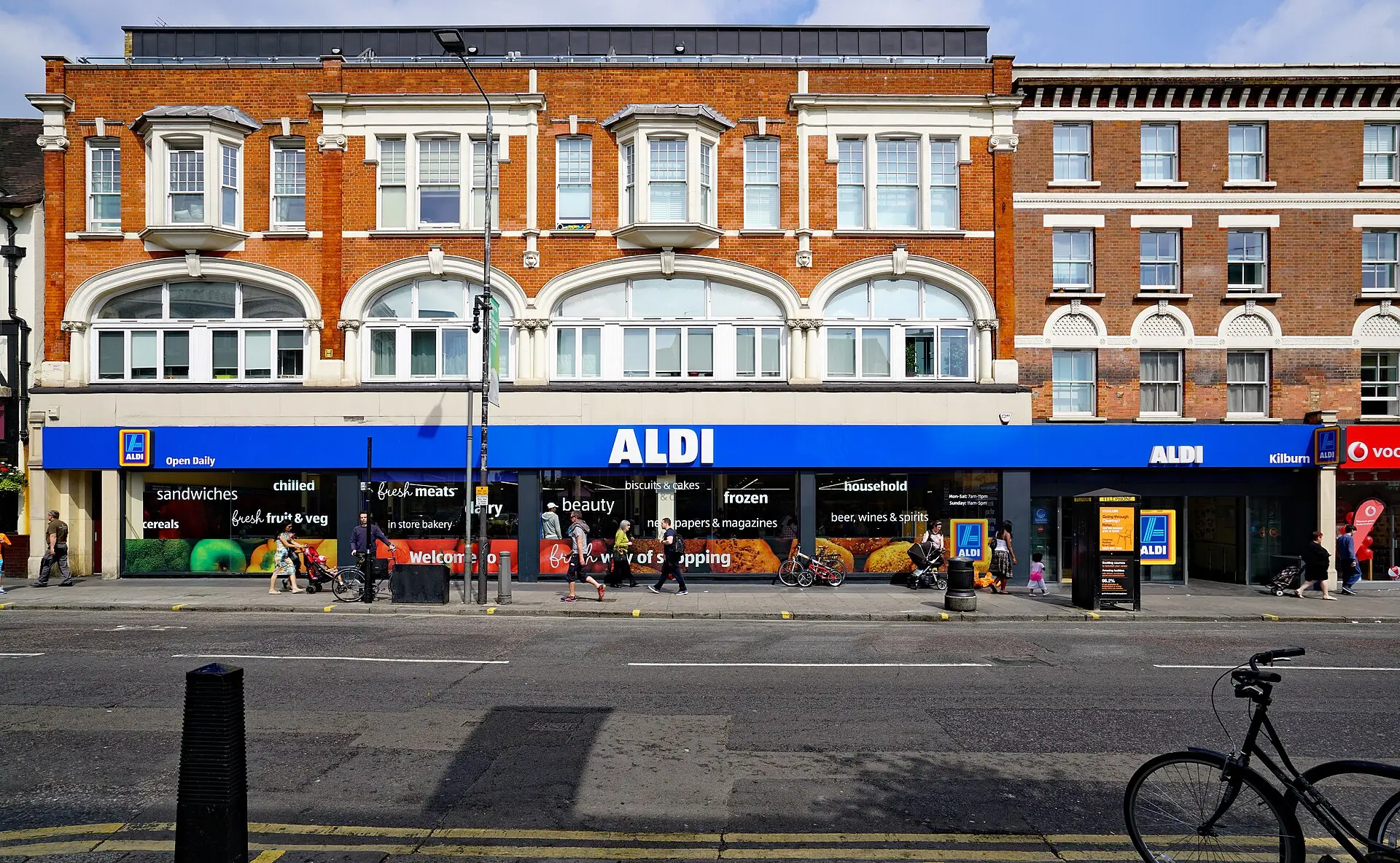
Willesden is getting a brand-new Aldi within weeks, after the discount supermarket chain confirmed the north-west London neighbourhood will be among 30 new shops opening over the next ten weeks.
The expansion forms part of a £900 million investment programme covering new shops, warehouses and distribution infrastructure. It comes despite a slight dip in annual profits, with the German-owned retailer reporting a 1 per cent fall in operating profits to £432.9 million for 2025 — down from £435.5 million the previous year.
The dip was driven by heavier spending on keeping shelf prices down and a growing wage bill, even as sales climbed 5 per cent and turnover hit a record £19 billion.
Chief executive Giles Hurley said the cost of food remained one of the biggest pressures on households across the country. He warned that recent droughts at home and events overseas had highlighted how fragile the food system is, adding that food security must be a long-term national priority.
“We’re working hard to make good food more affordable for every family — cutting prices on everyday essentials, signing long-term supplier agreements to help increase home-grown production, and continuing to bring affordable groceries to even more communities through our store opening programme,” he said.
Which locations have been confirmed?
So far, three of the 30 new sites have been named publicly: Willesden in London, Dumbarton in Scotland and Newport in Wales. No exact opening dates have been given for individual stores, with the company saying only that they will open “within weeks” — the full wave is due to land over the coming ten weeks, taking the rollout into early December. Further locations are expected to be announced as each opening approaches.
The chain currently runs 1,092 shops across the UK and Ireland. Another 40 stores are planned for 2027, as Aldi works towards a long-term goal of 1,500 UK stores — with a particular focus on neighbourhoods that lack affordable grocery options because of limited local choice or competition.
Key facts: Aldi’s 30-store opening spree
- 30 new stores opening over the next 10 weeks
- Willesden confirmed as the London location so far, alongside Dumbarton and Newport
- £900 million investment in stores, warehouses and distribution
- 1,092 stores currently trading in the UK and Ireland, with a long-term target of 1,500
- 40 further stores planned for 2027
- Record £19 billion turnover, with operating profits down 1 per cent to £432.9 million
- £340 million of price cuts earlier this year, with more promised before Christmas
What the expansion means for shoppers
For shoppers, the immediate win is choice — and price. Aldi has promised to keep cutting prices in the run-up to Christmas, following a £340 million round of reductions earlier this year. The chain says it is deliberately targeting communities where grocery competition is thin, meaning areas that currently have few budget options stand to benefit most.
With the festive season approaching, the timing is significant: the weekly shop remains one of the biggest household bills after rent, and discounters have become central to where Londoners go to shop — from weekly groceries to big trips out to retail destinations such as Bluewater.
The announcement is also the latest sign of change in London’s evolving food scene, as supermarkets, food halls and hospitality venues compete for the capital’s shoppers.
What the expansion means for jobs
Each new store brings recruitment — from store assistants to management roles — at a time when the retailer’s wage bill is already climbing. Aldi attributed part of its profit dip to higher staff costs, and the opening programme will add further roles across the country, including in the capital.
It comes as employers across London face growing scrutiny over fair pay commitments, with parts of the capital such as North Acton Square pioneering Living Wage zones.
Aldi is not the only business expanding its London footprint — Wetherspoons has also revealed plans for new pubs in the capital, underlining continued investment in the city’s high streets despite economic pressures.
With the Christmas trading period approaching, the coming weeks will show whether the rapid rollout — and the promised price cuts — can turn record sales into renewed profit growth.