


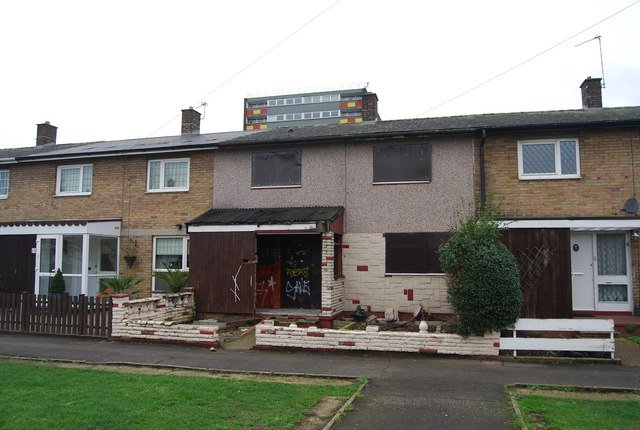
Town halls across London could soon be handed powers to take over the management of homes left standing empty for just six months, after ministers unveiled plans to revive a long-dormant weapon against vacant property.
The Ministry of Housing, Communities and Local Government announced on Sunday that the qualifying vacancy period for an Empty Dwelling Management Order, or EDMO, will be cut from two years to six months. The department also wants to remove evidential requirements around antisocial behaviour and community support for intervention, which councils have long blamed for making the orders too difficult to pursue. The reforms were announced by Housing Secretary Angela Rayner at Labour’s annual conference, according to the government announcement.
For London the stakes are higher than anywhere else in the country. Analysis by the London Assembly records 47,287 long-term empty homes in the capital in 2025 — properties sitting vacant for more than half a year. That is 138 per cent higher than the 19,845 recorded in 2016, and it jumped by almost a quarter in a single year, the Assembly’s research unit reports.
KEY FACTS
- What’s changing: the EDMO vacancy threshold would fall from two years to six months, and councils would no longer have to produce evidence of antisocial behaviour or community backing.
- When it takes effect: not yet — no commencement date has been announced and no amending statutory instrument has been published, so the two-year rule still applies.
- The London figure: 47,287 long-term empty homes in 2025 out of 105,138 empty homes in total. Barnet has the most at 3,278; the City of London the fewest at 152.
- Who can act: local housing authorities, which must secure tribunal approval before taking on a property.
What a council takeover actually means
An EDMO is not a seizure, and it transfers no ownership. Legal title stays with the property owner throughout; what changes hands is management. The council gains temporary powers to secure the building, carry out works and bring it back into use, for up to seven years.
Getting there is deliberately difficult. The authority must first investigate the circumstances, make reasonable efforts to contact the owner and consider what the owner plans to do with the dwelling. An interim order requires authorisation from a tribunal — now the First-tier Tribunal’s Property Chamber — and a final order can only be made where there is no reasonable prospect of the home becoming occupied in the near future without the council stepping in.
Why ministers are acting now
The backdrop is a city where homes remain chronically scarce. GLA evidence puts London’s underlying housing need at around 89,300 homes a year, while the pressure on renters stays intense even as house prices fell 3.3 per cent across the capital in the latest figures.
The announcement also lands as London’s town halls are pressing Whitehall for stronger levers over their local economies. Borough leaders have been demanding a fair share of new revenue powers as ministers prepare to hand mayors tourist tax powers, and the empty-homes shake-up adds another potential tool to their armoury.
A return to the original design
EDMOs were created by the Housing Act 2004, and section 134 of that Act originally set the bar at six months of continuous vacancy. The two-year threshold arrived in 2012, when an amending order lengthened the waiting period and at the same time loaded councils with extra evidence requirements on nuisance and community support.
The result was a regime that fell into disuse — no EDMO applications have been made since 2021. Sunday’s announcement effectively unwinds both of the 2012 restrictions, restoring the shorter timescale and lighter evidential burden that Parliament first envisaged.
Not in force yet — and the limits that remain
None of this is law yet. Sunday’s announcement sets out intent rather than commencement: no start date has been given and no draft amending regulations have been laid before Parliament. Until that changes, councils remain bound by the two-year prescribed period, and ministers have said nothing about how cases already in the pipeline would be treated.
The tribunal safeguards are staying put, and so is a long list of protected categories in the 2006 regulations. They cover owners temporarily living elsewhere, people away to give or receive care, armed forces personnel, holiday homes, properties genuinely on the market for sale or letting, homes in mortgagee possession and properties where the owner has died and six months have not passed since the grant of representation. Buildings under renovation get no blanket exemption, but a council must explain to the tribunal why an order is still needed to secure occupation.
The City of London, which recorded just 152 long-term empty homes — the lowest figure of any borough — has other politics on its mind, after a surprise withdrawal reshaped the Lord Mayor race.
What happens next
All eyes are now on the legal instrument that would give the policy teeth. It will need to set a commencement date and spell out exactly how the 2012 order is amended, including the transitional position for applications already under way. Ministers have also said they are exploring further changes to strengthen the regime and help councils use the powers more effectively.
Until then, the 47,287 figure should be read as housing-stock context rather than a tally of homes about to fall under council management. The statistics and the legal test measure different things, and many of those properties will sit in protected categories or be brought back into use by their owners.
If the change is brought into force, however, it would let councils move eighteen months earlier than they can today — opening the EDMO route without waiting for a second anniversary of vacancy, and pulling a far larger share of London’s empty homes within reach of intervention.