


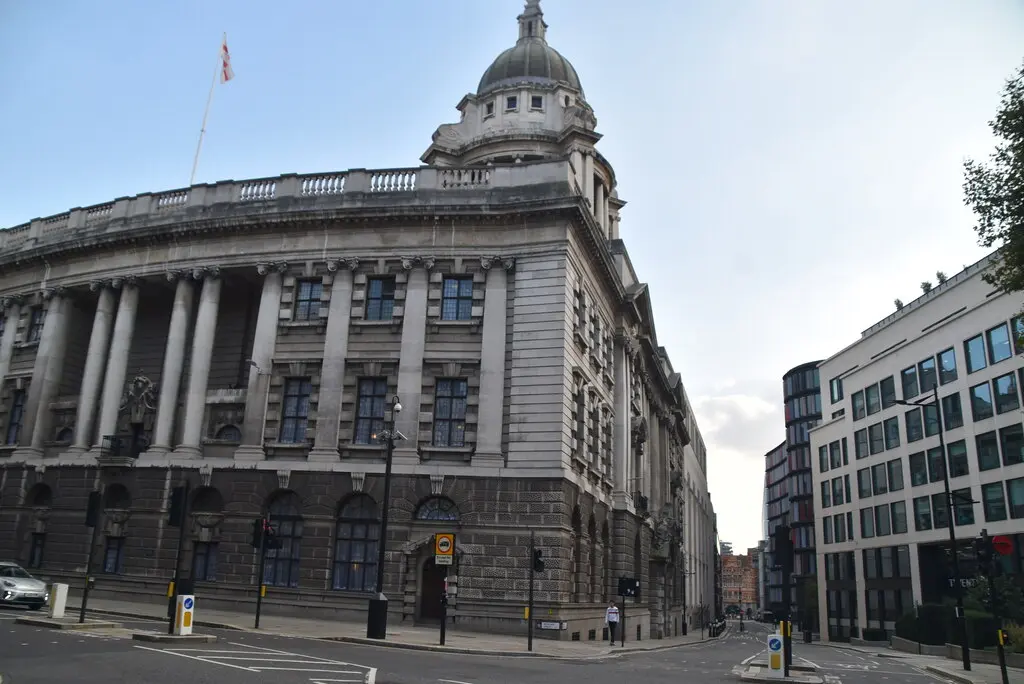
A 31-year-old man from Swindon accused of working for Russian military intelligence and preparing an act of sabotage on British soil has appeared at the Old Bailey, in a case prosecutors say was designed to assist Moscow’s war effort in Ukraine.
Joshua Cammidge appeared at the Central Criminal Court in London on Friday 25 September 2026, charged with assisting a foreign intelligence service and preparing an act of sabotage. The charges follow his alleged contact with the so-called “GRU Volunteer Corps”, which prosecutors say was controlled by Russia’s GRU military intelligence service.
The court heard that the prosecution case centres on messages Cammidge is alleged to have exchanged with a British national who had travelled to Russia to fight against Ukraine. Prosecutor Sarah Przybylska told the court that in the course of that correspondence, the defendant was tasked with locating drone manufacturing sites.
The charges are among the most serious brought under the new national security legislation, and the case is expected to be closely watched given its alleged links to the Russian state and the ongoing war in Ukraine, in which drones have become one of the defining weapons of the battlefield.
Prosecution outlines alleged sabotage plan
“They discussed sabotaging a site and the defendant volunteered to carry out such sabotage,” Ms Przybylska told the court. “It was clear all of this was to assist the Russian war effort.”
Prosecutors also accused Cammidge of researching a Wi-Fi jamming device and of undertaking reconnaissance, the court was told.
The GRU is Russia’s military intelligence directorate and has been blamed by Western governments for a series of hostile operations on foreign soil, most notoriously the 2018 Salisbury poisonings. Moscow has repeatedly denied carrying out such operations.
Defence: client will deny the charges
Cammidge was not asked to enter pleas during the short hearing. His lawyer, John Oliver, told the court his client intended to deny the accusations, insisting there was “no intention to cause or take part in sabotage” and that the messages exchanged were “not to be taken seriously”.
Cases involving alleged state-backed sabotage are rarely heard in British courts, but ministers and senior security officials have in recent years warned of a growing pattern of hostile activity directed by foreign states, including espionage, cyber operations and attempts to disrupt critical infrastructure.
Remanded in custody ahead of January hearing
Russia’s London embassy has not commented on the case, Reuters reported.
The defendant was remanded in custody. A plea hearing, at which defendants are formally asked to enter their pleas, is expected in January, with a trial at Winchester Crown Court scheduled for April.
The offences Cammidge is charged with were created under the National Security Act 2023, legislation introduced to give police and prosecutors new tools to counter hostile activity by foreign states. The Act covers offences including espionage, sabotage and assisting a foreign intelligence service.
The case comes amid heightened concern in Whitehall about alleged Russian espionage and sabotage activity in the United Kingdom. In recent years, British prosecutors have brought a string of national security cases against individuals accused of acting on behalf of foreign states, reflecting what ministers have described as a more dangerous threat picture.
His appearance at the Central Criminal Court — better known as the Old Bailey — places the case among the most serious criminal matters heard in the capital. The court routinely hosts major trials, from murder cases to national security prosecutions arising from counter-terrorism investigations.
The trial is expected to be heard at Winchester Crown Court in April. As with all criminal proceedings, nothing in this report should be taken as suggesting guilt: the charges against Mr Cammidge are allegations which he intends to contest.