


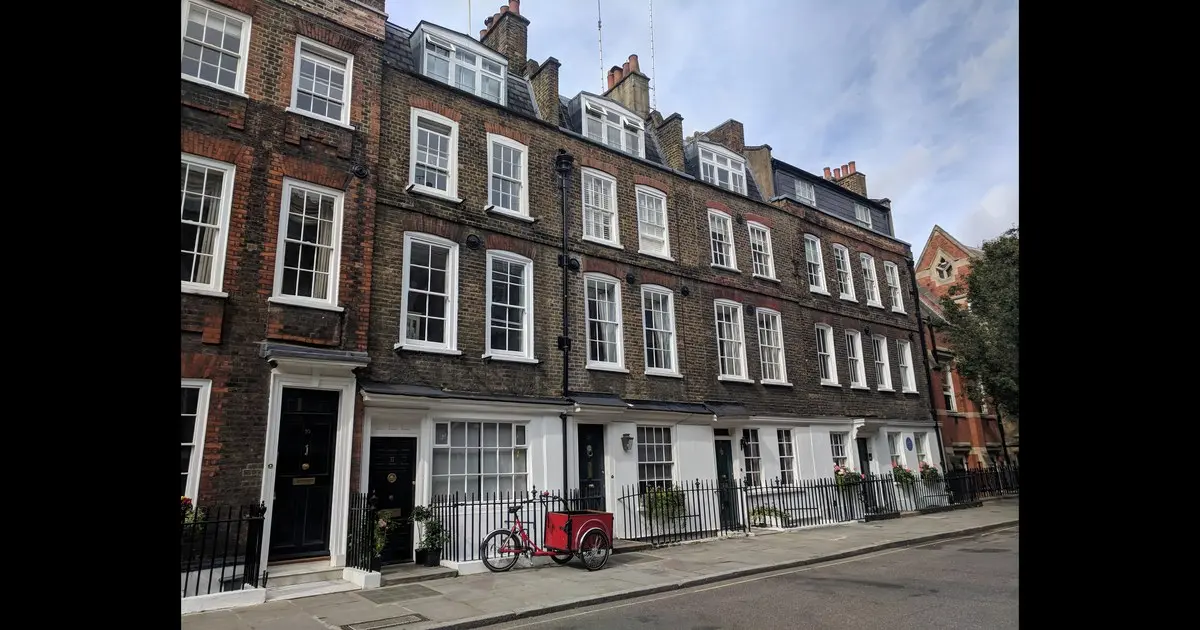
London house prices have fallen 3.5% in a year, official figures show, with the average home in the capital now worth £546,000 — £23,000 less than at the recent peak last summer.
The UK House Price Index from the Office for National Statistics (ONS) and HM Land Registry puts the average London property at £545,579 in September 2026, down 1.4% on August alone. The annual fall has deepened from 2.4% in the year to August, and the average price is now back at the recent low last seen in March 2026.
London was the weakest-performing region in England by some distance. Across the UK as a whole, average house prices rose 1.2% in the year to September, to £273,000 — unchanged from the rate recorded in August. In England, prices rose 0.8% to £293,000, while the North East recorded the strongest annual growth of any English region, at 4.6%.
The divide within the capital itself is stark. Prices in inner London fell 7.2% in the 12 months to September, the largest annual fall there since August 2009, when values dropped 8.9% in the wake of the financial crisis. Outer London, by contrast, was almost flat, down just 0.1% over the same period.
Flats are doing much of the damage. The average price of a London flat fell 6.3% in the year to September, the 14th consecutive month of annual falls for flats in the capital. That matters more in London than anywhere else: flats account for around half of all property sales here, compared with around one-fifth across Great Britain.
The borough-by-borough figures show just how uneven the downturn has been. Westminster saw the steepest annual fall, down 18.5% to an average of £861,130, followed by Kensington and Chelsea, down 15.6% to £1,170,938 — still the most expensive borough in the capital. Tower Hamlets fell 10.5% to £456,306 and Camden 10.0% to £789,180.
At the other end of the scale, Barking and Dagenham recorded the strongest annual rise of any London borough, up 5.1% to £372,551, making it the cheapest borough in the figures. The gap between the cheapest and the most expensive boroughs now stands at almost £800,000. Kingston upon Thames, up 1.8% to £591,640, and Bexley, up 1.4% to £416,683, were among the few other boroughs where prices rose. The City of London fell 17.3% to £663,585, although the ONS cautions that low numbers of sales there can make the figures volatile.
For buyers, the fall offers only limited comfort. Even after a year of declines, the average London home still costs almost exactly twice the UK average of £273,000, and a 10% deposit on a typical London property would still come to around £54,600. For sellers in inner London, meanwhile, the figures confirm a market that has been weakening for months, with flats — the property type most first-time buyers and downsizers depend on — falling fastest of all.
The wider market remains subdued. HM Revenue & Customs figures published alongside the index show an estimated 95,000 residential property transactions completed across the UK in September on a seasonally adjusted basis, 0.4% fewer than a year earlier. Mortgage approvals for house purchases, an indicator of future borrowing, fell to 53,400 in August, below the average of 58,800 over the previous six months, according to the Bank of England. The Royal Institution of Chartered Surveyors said in its September survey that while downward pressure on prices had eased somewhat compared with earlier in the year, it was “not yet dissipating entirely”.
The figures are provisional and will be revised as more sales are registered — the first estimates are based on around 49% of all sales in Great Britain in September. The ONS also cautions against putting too much weight on a single month’s data. The next release, covering October 2026, is due on 16 December.
The capital’s housing market has been moving in both directions at street level too. Inside Kenley’s most expensive road, homes average £1.6 million, while in Barking — the borough where prices rose fastest — the Vicarage Field shopping centre could be replaced by a 35-storey tower. And London’s ageing prisons could make way for thousands of homes under a Tory plan.