


When London hit -7C in November — the capital’s coldest autumn days on record
London is usually associated with chilly mornings, rain, and cloudy skies during November. But historical weather records reveal that temperatures have previously dropped as low as -7C in the capital.
With temperatures falling again this November, it is worth reflecting on some of the coldest November days recorded in the capital — and just how cold London can get before December.
The coldest November day at Heathrow
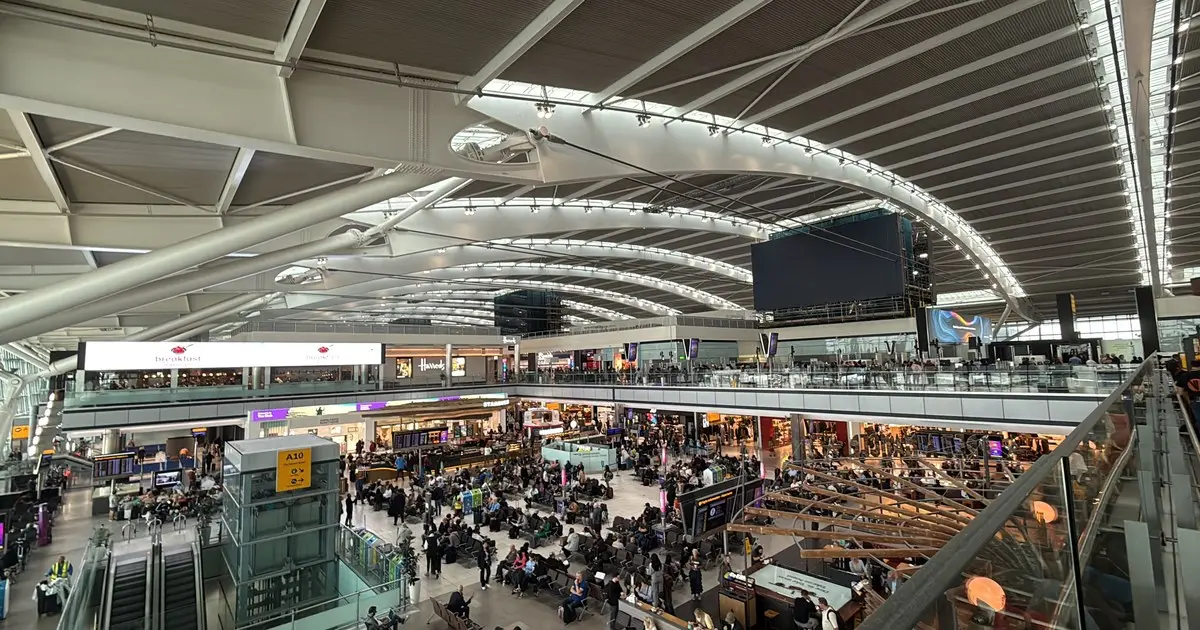
The lowest November temperature recorded at London Heathrow Airport since 1959 was -7C on 23 November 1983, according to historical weather records compiled by Extreme Weather Watch. This temperature remains the lowest November reading in the station’s dataset, showing just how cold London can become before December.
However, this is a Heathrow station record rather than a verified all-time record for the whole of Greater London. Temperatures can vary considerably between different parts of the capital, particularly between densely built-up central areas and more rural locations on the outskirts.
November 1983 stands out as one of the most memorable cold spells in Heathrow’s historical temperature records. On 23 November, temperatures fell to -7C, significantly colder than the conditions London typically experiences at this time of year. The following day, 24 November, Heathrow also recorded a minimum of -4.3C. Such temperatures would be unusual even during parts of December, demonstrating how severe late-autumn cold can become.
Other bitterly cold Novembers
Historical records from Heathrow reveal several occasions when temperatures have fallen well below freezing. On 22 November 1993, the temperature reached -5.8C, while on 14 November 1985, it was -5.7C. On 26 November 1989, the mercury dropped to -5.6C. Other notable dates include 30 November 1964, when the temperature was -4.9C, and 28 November 2010, when it reached -4.8C.
Another notably cold period arrived in November 1993. Heathrow recorded a minimum temperature of -5.8C on 22 November, making it the second-lowest November reading in the station’s historical dataset. Local weather observations from south-west London also describe November 1993 as an exceptionally chilly month. Several nights saw temperatures fall below -4C, while 22 November had a daytime maximum of just 1.2C at its local observation site. This meant temperatures remained close to freezing even during the warmest part of the day.
November 2010 brought another significant spell of cold weather across the UK. At Heathrow, temperatures dropped to -4.8C on 28 November. The wider country experienced much more severe conditions, with snow and ice affecting numerous regions. Wales recorded a temperature of -18C at Llysdinam in Powys on 28 November 2010. The same month also saw significant snowfall across parts of Britain, with snow depths reaching 58cm at Balmoral in Aberdeenshire on 30 November. The cold spell continued into December, becoming one of the most notable early-winter weather events of recent decades.
What is a typical November in London?
Despite these extreme historical readings, November temperatures in London are usually considerably milder. According to Met Office climate averages for Kew Gardens, based on the 1981 to 2010 period, typical November temperatures were: average daily maximum 10.6C, average daily minimum 3.6C, an average of 4.2 air frost days, and average monthly rainfall of 56.9mm.
These figures show that freezing temperatures are not unusual during November, particularly overnight. However, temperatures falling towards -5C or below represent much more severe cold than the capital typically experiences.
How London compares with the rest of the UK
While London’s November temperatures have previously fallen to -7C at Heathrow, other parts of the UK have experienced much more extreme conditions. The lowest November temperature ever recorded in the UK was -23.3C at Braemar in Aberdeenshire on 14 November 1919. England’s November record stands at -16.1C, recorded at Scaleby in Cumbria on 30 November 1912. Wales has recorded a November low of -18C, while Northern Ireland’s lowest November temperature is -12.2C.
London generally experiences milder winter temperatures than many rural areas because of the urban heat island effect. Buildings, roads, and other surfaces absorb and retain heat, helping to keep temperatures higher, particularly overnight. The concentration of buildings and human activity also contributes to warmer conditions in central London. However, outer areas of the capital, including parts of Bromley, Bexley, Croydon, and other suburban boroughs, can experience colder overnight conditions than the city centre.
Clear skies, light winds, and cold air can all contribute to sharp temperature drops, and temperatures below -5C remain possible in London during particularly severe cold spells, although they are uncommon in November. While recent forecasts have indicated another chilly period for the capital, this does not mean temperatures are expected to approach historical November records. Londoners can check the latest forecasts and weather warnings through the Met Office London weather page.
London is heading into a cold snap, with temperatures falling to 0C on Thursday, and here are the rules on when London schools close in snow and cold weather.