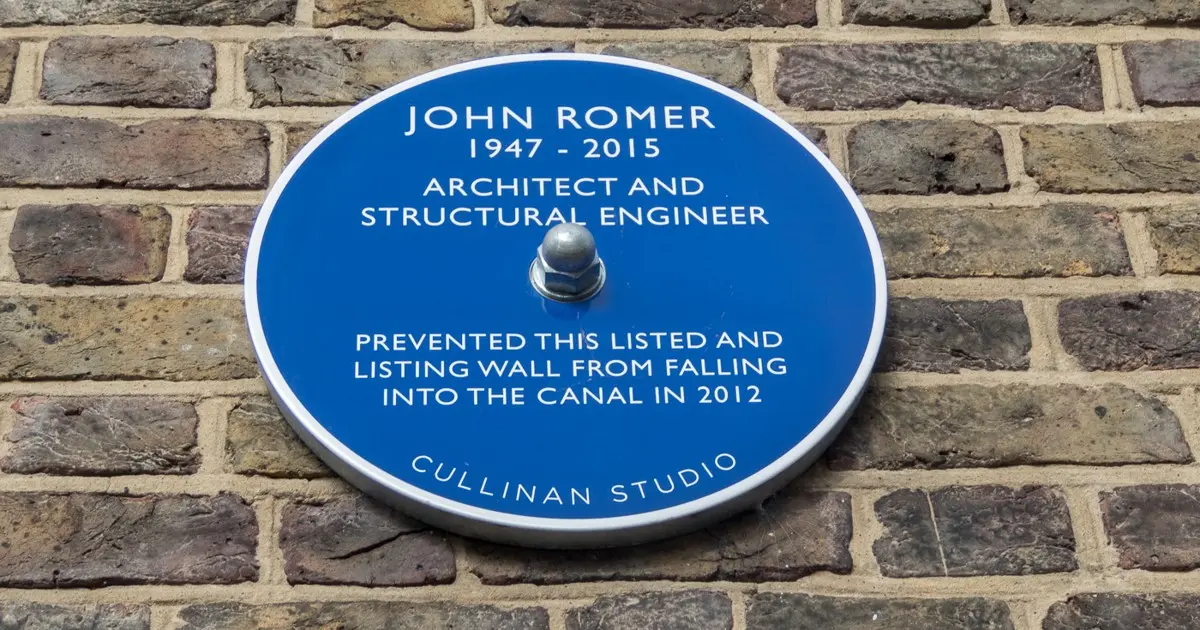
Blue plaques can now be placed where the original building no longer stands, under new rules aimed at honouring the people whose contributions to Britain have gone unmarked.
The change means a plaque can mark the site of a demolished home, a former music venue, a factory or a workshop — places that were previously ineligible because the building had to be largely unchanged.
Culture Secretary Lisa Nandy said the old rules were outdated and unfair, and that too many of the people who built the country had been airbrushed from its story.
Key facts
- What has changed: Plaques can now be placed at locations where the original building no longer exists
- Who runs it: The National Blue Plaque Scheme, launched in 2023 and managed by Historic England for the Department for Digital, Culture, Media and Sport (DCMS)
- Who it aims to recognise: People whose homes or workplaces were demolished or heavily altered, including millworkers, the Windrush generation and others whose contributions went unmarked
- Deadline: Applications for both the national and London schemes are open until 13 January, with plaques due to be unveiled next year
- Funding: A £100,000 grant has been awarded to Historic England this year to support the programme
Why the rules had to change
Until now, a blue plaque could only go on a building that was still largely as it was when the person lived or worked there. The DCMS said that requirement had prevented many deserving people from being recognised, especially those whose homes or workplaces have since been demolished or significantly altered.
Mrs Nandy said: “Throughout our history, it has been ordinary, extraordinary people who have built our country and created lasting change.”
“From millworkers who fought for fair wages, safe working conditions and the rights of women, to the Windrush generation who helped shape our NHS, transport, manufacturing industries and more – too often their contributions have been airbrushed from our national story.”
“Until now, it was difficult to commemorate their achievements with a blue plaque. These rules were outdated, unfair and do not reflect who we are as a nation. That’s why we have changed the rules so that we can properly commemorate the heroes who shaped our communities and changed our country for the better.”
What the historians say
Historian Professor David Olusoga welcomed the changes. He said: “English history has been shaped by women as well as men, by the poor as well as the wealthy, and by people across England and not just those who lived in London.”
“These welcome changes will liberate Historic England and English Heritage to celebrate the stories of England’s hidden heroes with their beloved blue plaques.”
Matt Thompson, conservation, curatorial and learning director at English Heritage, said the revised rules would “offer greater flexibility to recognise a wider range of individuals whose achievements deserve to be celebrated.”
Ellie Djerir, head of participation programmes at Historic England, said: “By widening the criteria of the National Blue Plaque Scheme, we can now celebrate more of the people who have shaped our history, wherever they lived and worked.”
How a blue plaque is earned
To qualify, a person or group must have made a significant contribution to human welfare or happiness, or achieved something exceptional in their field. Plaques can only be placed at locations with a strong historical connection to the nominee.
Individuals must have been dead for at least 20 years to be considered. Groups must also have been formed at least 20 years ago and no longer be active.
Recent figures recognised by the National Blue Plaque Scheme include actor Sir Laurence Olivier, Beatles guitarist George Harrison, Hollywood star Cary Grant, and Reverend Wilbert Awdry, creator of Thomas the Tank Engine.
The national scheme, launched in 2023, expands on the long-running London blue plaque programme and similar schemes across the UK. Funding has been set aside for community groups and grassroots organisations working to address historical gaps and increase geographic diversity in nominations, and the public can now submit nominations under the expanded scheme.
What happens next
Applications for both the national and London schemes are open until 13 January. Plaques from these nominations are due to be unveiled next year — the first to be awarded under the new, wider rules.