The slowest stretch of the M25 has been named — and at 4pm it takes more than three times as long as the same journey in the evening.
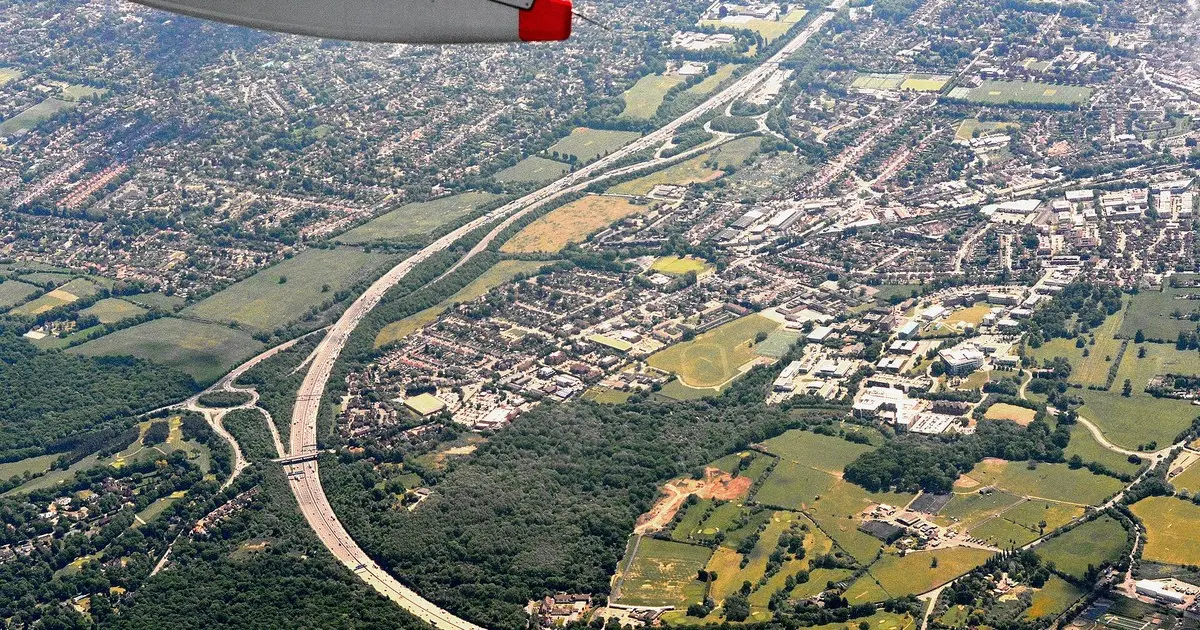
New research from vehicle technology company Geotab, published on 29 October, has mapped the motorway’s worst congestion hotspots, and every one of the eight worst sits between junctions 10 and 20, on the western side of the orbital, around the interchanges with the M3, M4 and M40 and close to Heathrow Airport.
The data was collected over 12 sample weeks between September 2025 and August 2026, covering thousands of commuters, delivery vehicles and holidaymakers who use the M25 every day.
The worst stretches at a glance
The slowest section by average speed is the clockwise stretch between junctions 14 and 15, which serves Heathrow Airport and the M4. Vehicles there averaged just 44.6mph, and a journey along the section at 4pm took an average of 9.2 minutes — compared with only three minutes at 7pm.
Another major hotspot is the anticlockwise stretch between junction 12, where the M25 meets the M3, and junction 11 at Chertsey. Traffic there moved at an average of just 68 per cent of the posted speed limit.
Between junctions 15 and 16, from the M4 to the M40, clockwise traffic averaged 70 per cent of the speed limit, while traffic in the opposite direction averaged 72 per cent.
The anticlockwise section between junctions 17 and 16 was also singled out as a serious rush-hour problem. A journey from Mill End towards Denham took an average of 15.6 minutes at 7am, but just 6.6 minutes at 7pm.
And the anticlockwise stretch between junctions 13 and 12 was flagged for unreliable journey times: almost a third of working hours there were at least 30 per cent slower than normal, and during the worst five per cent of working-day hours, journeys took twice as long as usual.
When the motorway grinds to a halt
The research also sheds light on when the M25 is at its worst. Among the vehicles analysed, 6am was the busiest hour by traffic volume — but speeds began to fall at 7am, recovered during the middle of the day, and hit their lowest point between 4pm and 5pm.
Monday and Friday saw the most periods of significant disruption. Across the 12 sample weeks, Geotab identified 659 periods when speeds fell to 70 per cent or less of normal levels, and 236 of those lasted at least two hours.
The findings also challenge the idea that rush hour starts at 8am. Congestion can begin much earlier, with the early morning build-up already affecting journeys before the traditional commuting peak.
What drivers think — and what the data says
Drivers surveyed by Geotab named other stretches as particularly frustrating, including the clockwise sections between junctions 2 and 5 in Kent and the anticlockwise sections between junctions 26 and 29 in Essex.
But the vehicle data did not rank those sections among the motorway’s worst overall. They shared one common problem, though: their slowest working-day journeys also happened at 7am.
The gap between perception and data is a reminder that the experience of congestion depends heavily on the route and the time of travel — a stretch that feels dreadful at 7am may flow freely by mid-morning.
Planning around the peaks
Drivers who regularly use the M25 are advised to check live traffic information before setting off, particularly when travelling through the western section, and to consider adjusting their departure times where possible.
That advice matters on the J12 to J11 stretch in particular — the same section was in the news earlier this week after a crash closed lanes and left drivers facing severe delays.
Motorists should not assume that alternative local roads will necessarily be quicker, the research warns, and National Highways provides live traffic updates, planned roadworks and closure information across the motorway network.
Drivers heading through the western section over the festive period should also note that overnight restrictions are planned around junction 3 at Swanley, with traffic management removed over Christmas and New Year.
One important caveat: the research reflects historical traffic patterns rather than live conditions, so delays can vary depending on incidents, roadworks and the time of day. Checking the latest updates before setting off remains the best way to avoid the worst of it.