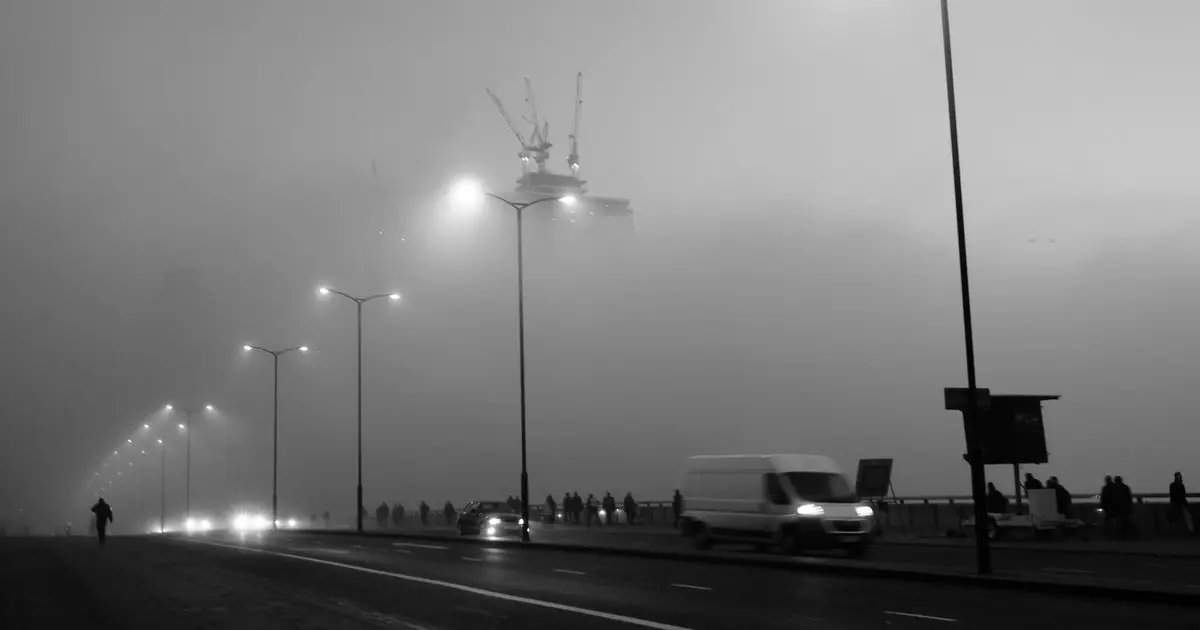
London and the South East recorded the highest possible air pollution rating on Sunday, as still air and thick fog trapped smoke from Bonfire Night celebrations over the capital.
The region was given a purple rating of 10 out of 10 on the Department for Environment, Food and Rural Affairs (Defra) air quality scale — the top of the scale, described as “very high” pollution. The North West and Merseyside, and Eastern England, were also given the highest rating.
The Met Office said light winds had allowed pollution to build up, particularly near busy roads, in urban centres and in areas where dense fog was slow to clear. Smoke from bonfires and fireworks over the Bonfire Night weekend added to the problem, with fine particles hanging in the cold, still air.
London was ranked among the ten most polluted major cities in the world on Sunday morning, according to air quality monitor IQAir, which recorded an air quality index above 170 in the capital at 6.30am. Fine particulate matter, known as PM2.5, was running at nearly 17 times the World Health Organization’s annual guideline level.
What the rating means
Defra measures air pollution using five key pollutants, including nitrogen dioxide, sulphur dioxide, ozone and particulate matter, and applies its Daily Air Quality Index to its forecasts so people can plan ahead.
The index runs from 1 to 10 across four bands: low, moderate, high and very high. A score of 10 sits at the very top of the “very high” band.
Public Health England describes poor air quality as the UK’s largest environmental risk to public health, linking long-term exposure to chronic heart and lung conditions, including lung cancer. It warns that even short-term exposure to high pollution can worsen asthma and lead to increased hospital admissions.
Defra’s guidance for very high pollution says adults and children with lung problems, adults with heart problems and older people should avoid strenuous physical activity outdoors. People with asthma may find they need to use their reliever inhaler more often. The general population is advised to reduce physical exertion outdoors, particularly if they develop symptoms such as a cough or sore throat.
How today looks
Air quality has improved since Sunday but remains poor. A yellow warning for fog covered Greater London from 6pm on Sunday until 11am on Monday, with visibility falling as low as 50 metres in places.
Defra’s forecast, issued at 6am on Monday, said much of the UK should retain low levels of air pollution today, but areas of high pollution were possible near built-up areas, especially in parts of central and southern Britain, because light winds and fog would keep inhibiting dispersion. London’s own air quality forecast has pollution at moderate levels through the end of Monday.
By tomorrow, Defra expects air pollution to be mainly low, with a chance of high levels in central parts of Britain, and strengthening winds midweek should bring levels down generally across the country. London’s clean-air rules, including the Ultra Low Emission Zone, are aimed at cutting the traffic pollution that builds up in still air.
Campaigners noted the timing: the episode came 74 years after the Great Smog of December 1952, when a thick, toxic fog settled over London for days. The clean-air group Clean Air in London described Sunday’s pollution as extreme, and said bonfires and fireworks had been blasted into the fog for days, creating a smog full of smoke and other particles.
Londoners with asthma or heart and lung conditions are advised to check Defra’s daily air quality forecast before heading out, and to keep reliever inhalers to hand while pollution levels remain raised.