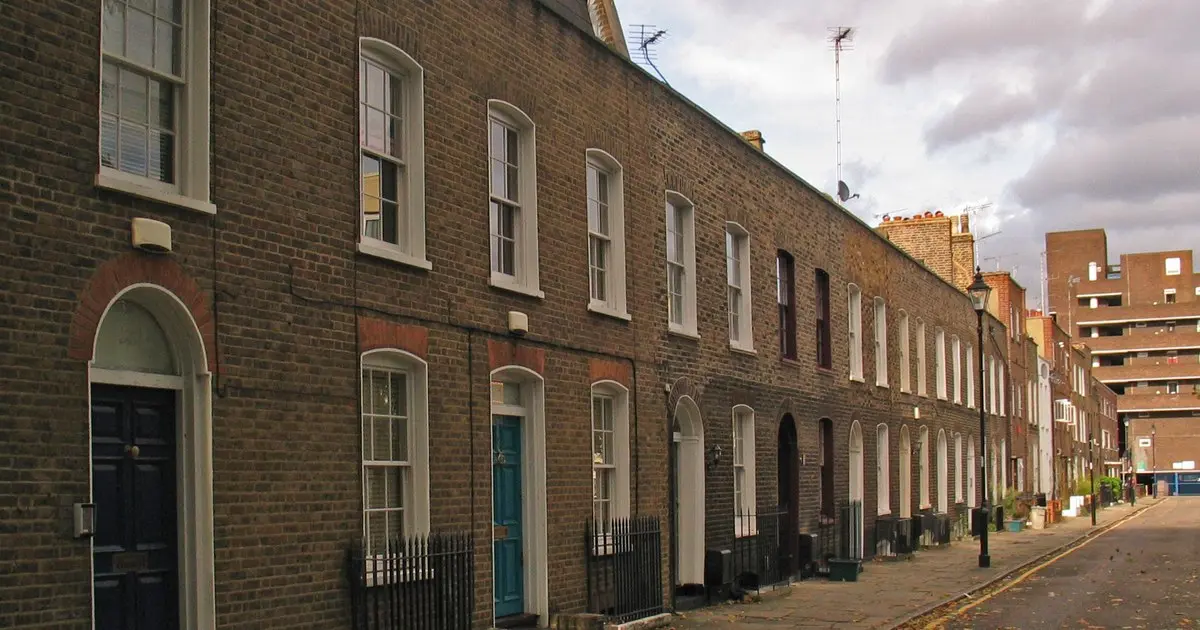
House prices in London fell by 3.1% over the past year, the largest regional fall anywhere in the UK, taking the average home in the capital to £524,892.
Across the UK, prices fell by 0.6% in October, a second consecutive monthly decline, taking the average property value to £296,285, according to figures from Lloyds. On an annual basis, prices were 1.2% lower than in October 2025, the largest yearly decline since October 2023.
September had seen a smaller fall of 0.1%, when the average price stood at £298,167. October’s drop was larger, and Andrew Asaam, mortgages director at Lloyds, said the market was being tested by a difficult economic backdrop.
“Housing demand is currently being tested by a challenging economic backdrop. Renewed inflationary pressures, driven in part by the conflict in the Middle East, are keeping borrowing costs high and adding to the squeeze on household finances, making some buyers understandably more cautious,” he said.
“However, it’s important to put October’s fall in context. House prices have changed relatively little over the past couple of years, as the market has gradually adjusted to higher interest rates.”
The regional picture is split sharply between north and south. In England, only three regions recorded annual house price increases: the North West, up 2.2% to an average of £249,916; the North East, up 2% to £184,318; and the West Midlands, up 0.3% to £261,656.
Southern England, by contrast, saw the largest declines. Alongside London’s 3.1% fall, both the South East and the South West recorded annual declines of 2.4%, with average prices falling to £379,258 and £298,057 respectively.
The devolved nations all recorded growth. Northern Ireland continued to record the strongest annual house price growth in the UK, although the rate slowed from 6.9% in September to 4.4% in October, with the average property price reaching £228,708. Scotland recorded annual growth of 2.8%, taking its average property value to £222,667, while Wales recorded an increase of 1.6%, with the average reaching £233,116.
Borrowing costs are the main brake on the market. The figures came a day after the Bank of England raised interest rates to 4%, and mortgage experts say the decision will keep pressure on buyers even though fixed-rate deals had largely priced it in already.
Karen Noye, mortgage expert at Quilter, said: “The figures come just a day after the Bank of England raised interest rates to 4%, reinforcing the message that borrowers are likely to face higher mortgage costs for longer. While fixed-rate mortgages had largely priced in the move already, the decision acts as another reminder that hopes of a rapid return to cheaper borrowing are likely to remain just that, hopes.”
Amy Reynolds, head of sales at Richmond estate agency Antony Roberts, said fixed rates had been heading towards 6% for weeks. “The market has lost some momentum as we head towards the end of the year. Buyers are still out there, but they’re being careful. Borrowing costs are the main brake,” she said, adding that she expects “a quiet December and a slow start to 2027”.
First-time buyers are likely to feel the squeeze most. Noye said they were “often the canary in the coal mine for the housing market”, and that uncertainty over borrowing costs could force buyers to lower their expectations or delay their plans. Nathan Emerson, chief executive of Propertymark, said the recent Budget had given prospective first-time buyers greater clarity, with the decision to broaden the ‘Your First Home’ scheme “potentially making homeownership accessible to more people across England”. The government’s 2.5% deposit scheme for first-time buyers is also due to come into force.
Looking ahead, Asaam said conditions were likely to remain subdued in the near term, but he did not expect a sustained period of falling prices. “With wages continuing to rise faster than property prices, the gap between earnings and house prices should gradually narrow, helping affordability to improve over time,” he said.
The figures follow official data showing house prices falling in 22 of London’s 33 boroughs in the year to August, with some of the capital’s most expensive areas recording the steepest drops.