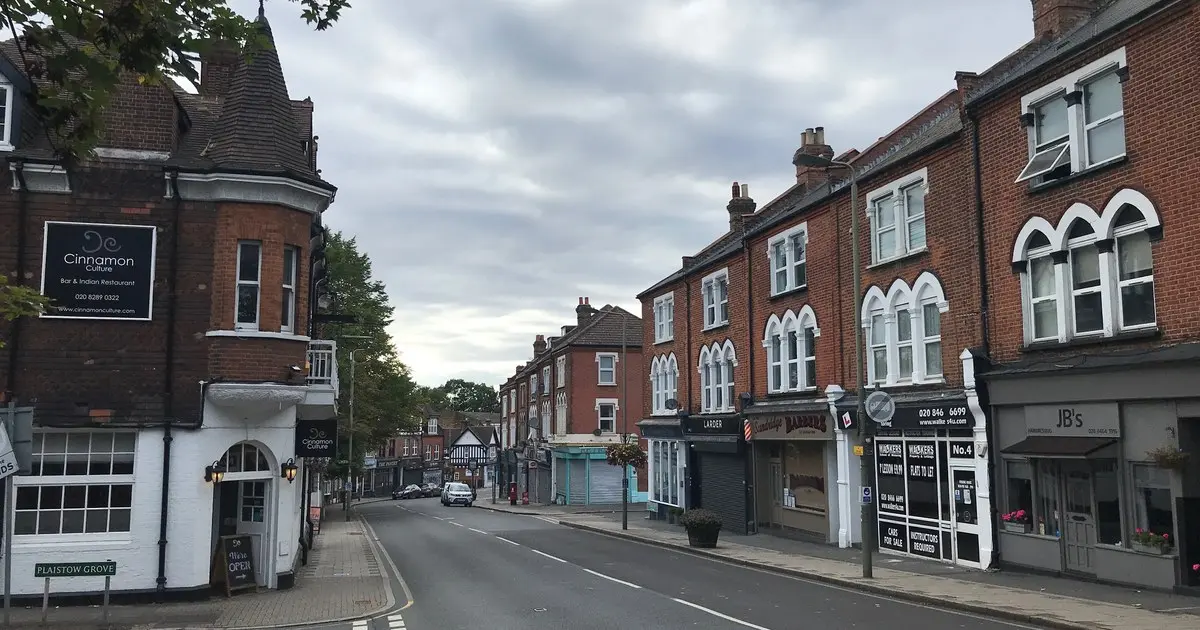
Plans to turn David Bowie’s childhood home into a museum have been withdrawn, in a setback for a project that promised to bring thousands of visitors a year to a quiet Bromley street.
The application, from the Heritage of London Trust, was withdrawn on Bromley Council’s planning website on Thursday. It is important to be clear about what that means: the scheme has not been refused or rejected by the council. It was withdrawn by the applicant itself, and the trust says it intends to try again.
A spokesperson for the trust said: “Due to some minor administrative issues we have withdrawn the planning application and will be resubmitting it soon.” They added: “The Bowie’s House project is very exciting and the cultural relevance of the place Bowie grew up in is so powerful.”
The trust acquired the terraced house at 4 Plaistow Grove, Sundridge Park, earlier this year. Plans submitted in June sought to change the use of the property from a residential dwelling to a memorial house, restoring the building and adding a visitor centre in the garden. The project was expected to attract around 20,000 visitors a year, and had previously been expected to open in late 2027. The house itself is thought to have sold for somewhere in the mid-£400,000s.
The proposal divided opinion on the street. Some neighbours raised concerns about noise, parking and security if a steady stream of visitors began arriving at what is currently an ordinary residential road. The Crown pub also objected, after its delivery area was suggested as the museum entrance.
Next-door neighbour Ruth Dickie, of 6 Plaistow Grove, said she had felt “sick” since the plans were announced. Her late husband Jim died two years ago, and she has described the garden as a solace since then. The proposed visitor centre would stand three metres tall, rising nearly a metre above her garden fence, a detail that has sharpened local unease about how the scheme would sit alongside the homes around it.
Bromley Council and the Plaistow Grove Residents Association were approached for comment, and no response from either had been stated at the time of writing.
The house itself carries an extraordinary history. Bowie lived at 4 Plaistow Grove from 1955 to 1968, from the age of eight to twenty, the years in which a suburban schoolboy became a musician. In a 1990 interview he described his bedroom there as his “entire world”. He died in 2016, and the places that shaped him have drawn fans ever since, which is why celebrations of his life in London continue to pull crowds decades later.
That pull is exactly what makes the museum idea both exciting and complicated. A house museum is a small, intimate thing by nature: a terraced home, a garden, a street where people actually live. Twenty thousand visitors a year is a modest number for a major attraction, but a very large one for a single residential road, and the trust will need to show, when it resubmits, how coaches, queues and cars would be handled without overwhelming the neighbours.
For now, the withdrawal pauses rather than ends the story. The trust has been explicit that the project is still alive, and that the issues behind the withdrawal are administrative. But the resubmission will land in the same context: a street that is proud of its most famous former resident, and wary of what fame does to a quiet road.
Bromley has seen planning rows like this before, where a much-loved local building becomes the centre of a wider argument about change. The council recently approved a revamp of the Tigers Head pub in Chislehurst despite fears about clutter, a reminder that decisions here tend to turn on the fine detail rather than the principle alone. The Bowie’s House resubmission will be judged the same way: not on whether the star deserves a museum, but on whether this house, on this street, can carry one.