The Bakerloo line extension has been given a major boost in today’s Budget, after the Chancellor announced a sweeping devolution of tax powers that could change how London pays for big transport projects.
Chancellor John Healey told MPs that local and regional government should keep more of the money raised in their own areas, instead of having to ask Whitehall for funding. Under the roadmap set out in the Budget, local and regional government are intended to retain 100 per cent of business rates income before the end of the decade, with mayors receiving a share of business rates from 2027. From 2027, 20 per cent of business rates revenue will go to mayors, and from 2028 a share of income tax receipts will follow, replacing grants from central government.
Healey described the plans as “the most radical act of devolution in a generation”, adding: “Local leaders shouldn’t have to come cap in hand to Whitehall to build a new tram or a new concert hall.”
The Chancellor name-checked the Bakerloo line extension as one of the projects that could benefit. The Mayor of London welcomed the announcement, calling the Budget “a really positive and significant day for London”.
“By giving London the ability to keep more of the money we raise, we can invest billions of pounds more in our future, helping to finally unlock transformational infrastructure projects such as the West London Orbital, the Bakerloo Line extension and the Euston knowledge quarter project, supporting tens of thousands of new homes, jobs and economic growth,” the Mayor said.
What the extension would do
The Bakerloo line extension would run south from Elephant & Castle to Lewisham, with stations at Burgess Park, Old Kent Road and New Cross Gate, with a possible later extension past Lewisham to Hayes and Beckenham Junction.
It is one of south-east London’s longest-discussed transport schemes. Much of the area it would serve is poorly connected by Tube, and supporters argue it would unlock thousands of new homes along the Old Kent Road corridor and beyond.
Transport for London’s estimate, published earlier this year, put the extension to Lewisham at between £4.2 billion and £7.5 billion in 2025 prices. Continuing to Hayes would add between £1.9 billion and £3.3 billion. Those figures are based on an estimate prepared in January 2024 and remain subject to revision as the designs develop.
The cost will also depend on replacing the ageing Bakerloo line trains and upgrading the depots that serve them. Doing both together is generally cheaper, and supporters of devolution argue that giving the Mayor and TfL control of the funding would allow the longer-term thinking that critics say is often missing at the Treasury.
Why the funding mechanism matters
The significance of today’s announcement is not a single cheque for the extension. It is a change in how projects like it can be paid for.
Crucially, the policy change allows regional mayors, such as the Mayor of London, to borrow against future tax revenues. Those powers already exist, but tend to be limited to smaller projects decided by local authorities, rather than regional mayors. When the Elizabeth line was funded, allowing the Mayor to borrow against future tax revenues required an Act of Parliament. In theory, devolving tax revenues to the regions and away from central government should make it easier and faster for local governments to invest in transport upgrades.
For London, the logic is that a railway which enables more homes and workplaces to be built could also help generate the income needed to pay for its construction, through the business rates and tax receipts those new homes and workplaces produce.
The Budget will also enable the Mayor of London to establish a successor to the Elizabeth Line Business Rates Supplement, paid by large companies in London and scheduled to end by 2041. The government says the successor supplement, alongside the wider fiscal devolution package, will help the Greater London Authority to finance future transport infrastructure projects such as the West London Orbital and the Bakerloo Line Extension.
What else the package touches in London
The Bakerloo extension is not the only London project named in the package. Upgrades to the London Underground station at Euston ahead of HS2 arriving could be funded through a Tax Increment Financing mechanism, by setting up a business rates retention zone. The small print will matter here, as the Tube station upgrade was previously expected to be funded by the wider HS2 and Euston station project, but might now be funded locally instead.
The Mayor has also separately confirmed that the government will support efforts to upgrade Stratford International station so it can finally accept international trains. That is linked to aspirations by Virgin Trains to call at the station when their international service launches in 2030.
Elsewhere in the capital, transport upgrades continue to compete for attention and funding. Liverpool Street station’s only mainline passenger lift is due to close for three months from 22 November for major renewal works, a reminder that even existing step-free access needs sustained investment alongside new lines. (Read more: Liverpool Street’s only mainline lift to shut for three months.) This evening’s rush hour has also seen disruption on the District, Central and Mildmay lines. (Read more: District line suspended and Mildmay severe delays in evening rush.)
What remains uncertain
None of this means the Bakerloo extension is approved, funded in full, or about to start construction, and today’s announcement should not be read that way.
It will depend on the small print when the bill is published to allow taxes to be retained locally. The changes are phased in by the end of the decade, so projects starting now will need to factor in that the first few years might lack income, even though spending is already underway.
There is also a trade-off. Local governments could have fewer options to ask central government to fund projects, so while low- to medium-cost upgrades can be funded locally, very large pan-regional projects may struggle to raise enough on their own.
What today does change is the framework. For the first time, the Mayor of London would have a growing, locally retained revenue stream to borrow against, rather than depending on a one-off grant or an Act of Parliament for each major scheme. Whether that is enough to turn the Bakerloo extension from a long-discussed plan into a funded project will depend on the legislation that follows, the final designs, and the revised costings that come with them.
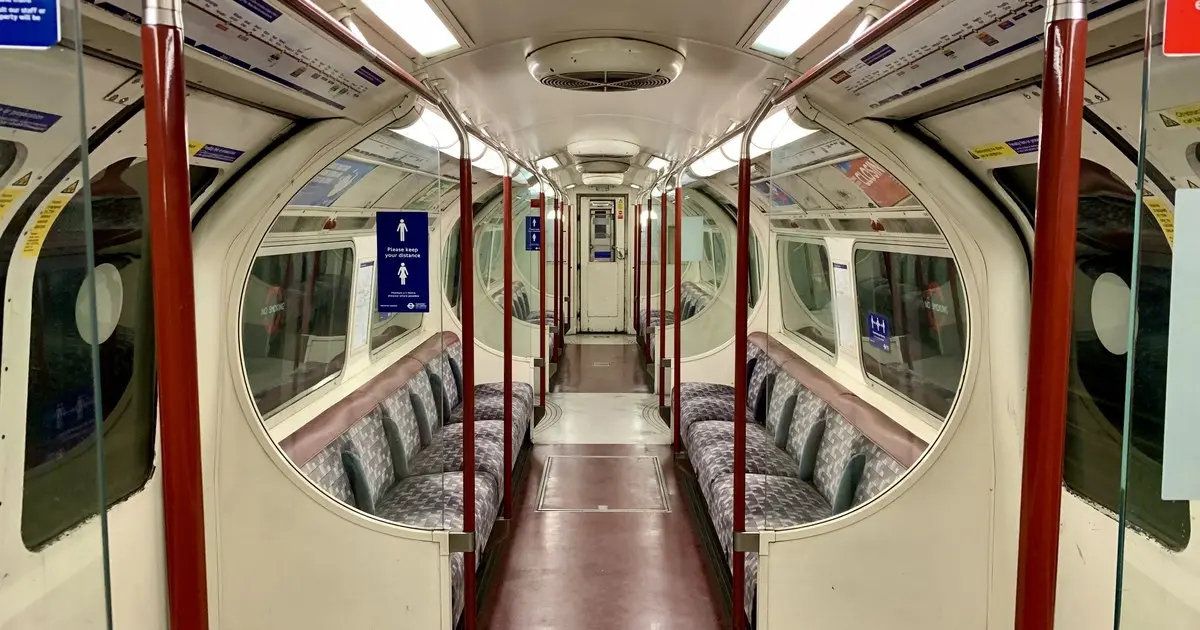
Image: A Bakerloo line train (library photo, Wikimedia Commons).