Business leaders have urged Chancellor John Healey to use the autumn Budget to give Sadiq Khan the power to keep more of London’s business rates — and plough the proceeds into the long-promised Bakerloo line extension to Lewisham.
BusinessLDN, the capital’s business lobby group, said City Hall should be allowed to establish a Business Rate Retention Zone, letting it hold on to a greater share of the tax revenue raised from London firms instead of seeing it redistributed to other regions, and invest it in infrastructure projects.
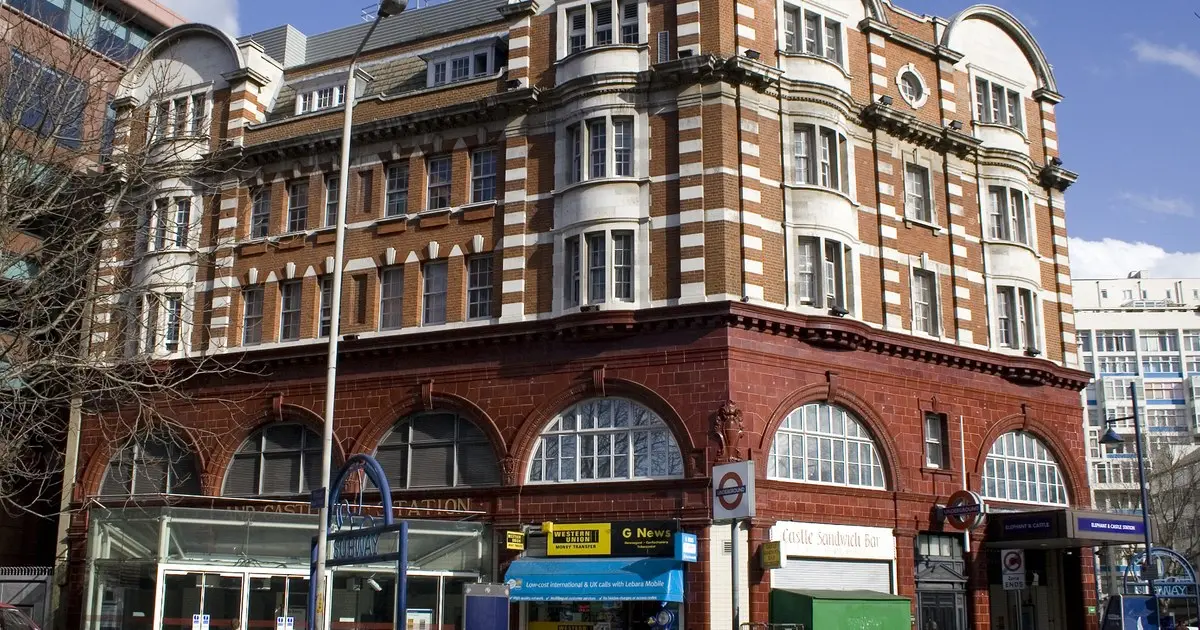
Top of the group’s wish list is the Bakerloo extension. The plan would take the line from Elephant and Castle through Old Kent Road and New Cross Gate to Lewisham, converting the existing National Rail line via Catford to Hayes into a London Underground operation with more frequent services and improved journey times.
The scheme includes a new Bakerloo line ticket hall at Elephant and Castle, two new stations along Old Kent Road, a new station at New Cross Gate improving connections to National Rail, Overground and bus services, and an improved interchange at Lewisham linking National Rail, the DLR and buses.
Supporters say the extension, alongside the potential West London Orbital, could create 20,000 jobs and pave the way for 36,000 new homes, while improving transport links across a corner of the capital that has long felt underserved by the Tube.
John Dickie, chief executive at BusinessLDN, said: “What matters most in this Budget is maintaining fiscal stability, so keeping a tight grip on spending and avoiding tax increases that undermine Britain’s competitiveness.”
He added: “They promise an improvement in delivery of public services and crucially give local leaders the ability to drive forward the infrastructure, housing and education that their communities and businesses need.”
“Allowing more of the tax revenues raised locally to be retained locally will be key to enabling and incentivising decision-making that drives and unleashes growth,” he said.
A scheme decades in the making
The Bakerloo extension to Lewisham is one of London’s most talked-about — and longest-delayed — transport projects. Versions of an extension south of Elephant and Castle have been discussed for decades, and the current proposal took clearer shape when Transport for London ran public consultations in 2017 and again in 2019, later safeguarding the route for future construction.
Momentum stalled after the pandemic, which devastated TfL’s finances and left the scheme without committed funding. Since then the project has survived largely as an aspiration: backed in principle by City Hall and business groups, but waiting for a funding route that does not depend on central government writing a very large cheque.
That is precisely what the retention-zone proposal is designed to solve. Rather than asking the Treasury for a lump sum, City Hall would capture the uplift in business rates generated by development along the corridor — new homes, offices and shops drawn in by the promise of a Tube station — and recycle it into the cost of building the railway itself.
What a retention zone would mean in practice
Business rates are the property tax paid by shops, offices and other commercial premises. Under current arrangements, boroughs collect the money but much of it is pooled and redistributed nationally, so London sees only a portion of what its businesses pay.
A Business Rate Retention Zone would let City Hall keep a larger share of the rates raised within a defined area and earmark the growth for infrastructure. The idea is that the railway unlocks development, the development generates rates, and the rates help pay for the railway — a self-reinforcing loop that business leaders argue is fairer than the status quo.
London has previously taken part in business-rates retention pilots, but campaigners want the principle extended and put on a permanent footing for major schemes, giving the Mayor a dependable long-term revenue stream rather than one-off grants.
The wider picture
The call comes as southeast London’s rail network faces a difficult week, with Bromley passengers urged to check before travelling during a week of Southeastern changes, and follows this morning’s Elizabeth line disruption caused by a faulty train.
It also lands against a backdrop of severe pressure on public spending, with Westminster council planning 520 job cuts — a reminder of why business groups are pushing for locally retained revenues rather than fresh demands on the Treasury.
Whether the Chancellor takes up the proposal will become clear when he delivers the autumn Budget. For the communities along Old Kent Road and in Lewisham, Catford and Hayes, it could be the difference between another decade of waiting and a Tube line finally arriving.