A Conservative hopeful vying to become the party’s candidate for Mayor of London has promised to hire hundreds of new TfL guards to enforce a ban on loudspeaker phone calls and music across the capital’s transport network.
Festus Akinbusoye, a former Bedfordshire Police and Crime Commissioner who now sits as a Westminster councillor, said the guards would patrol the Underground and confront passengers who subject fellow travellers to blaring music or speakerphone conversations. He also wants trains to carry automated announcements reminding passengers not to disturb others with calls, music or videos.
“On public transport, I don’t want to hear your Stormzy,” he said, adding that while he loves music, he wants to keep it for his own personal use rather than have it shared with the whole carriage.
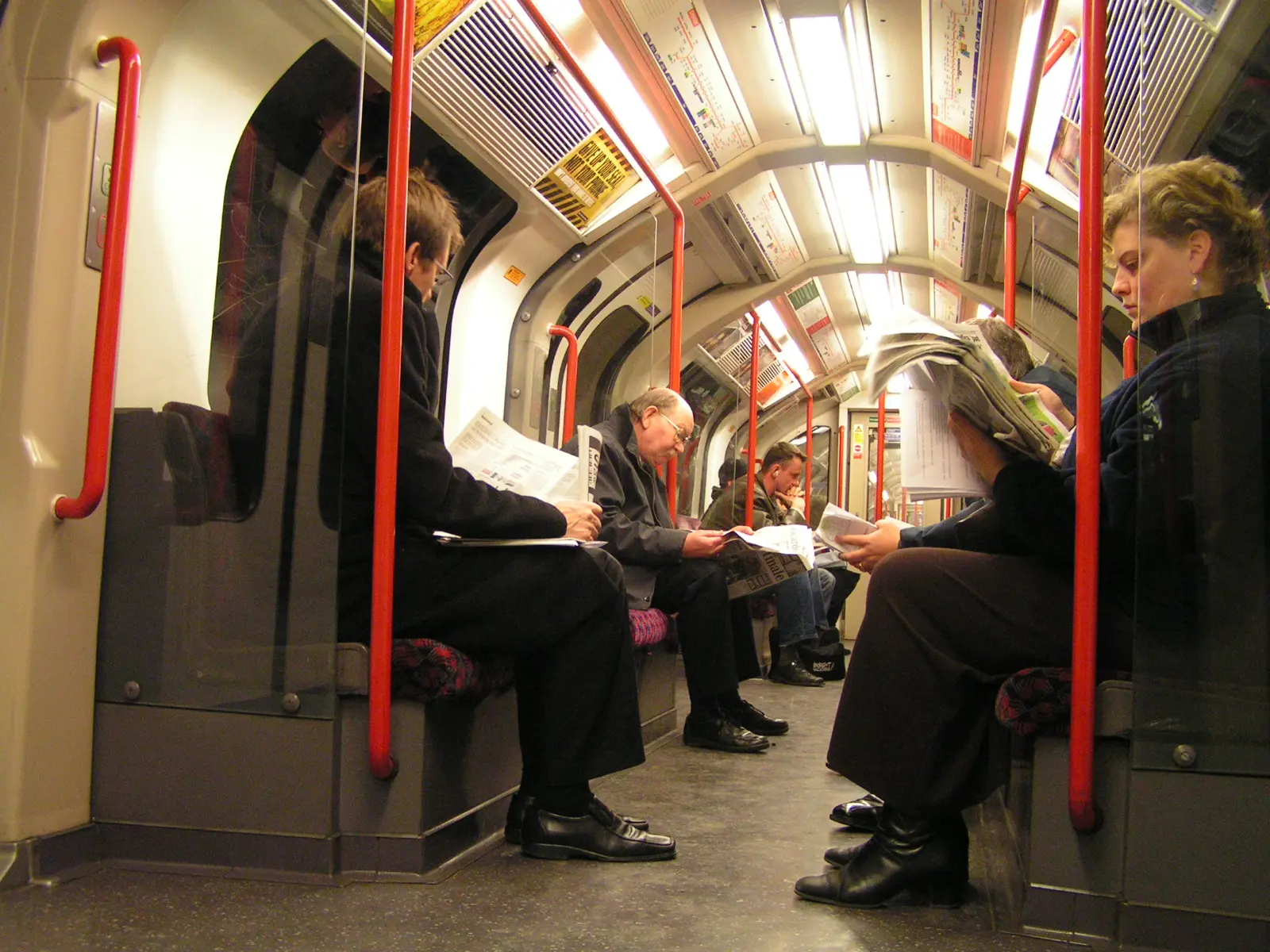
Automated reminders and the rules as they stand
Mr Akinbusoye said an automated system could play messages at intervals during journeys, reminding passengers that public transport is a shared space and setting out the expectations for considerate behaviour.
The proposal taps into a familiar commuter grievance: the carriage filled with someone else’s playlist, the video playing at full volume, the holiday plans broadcast on speakerphone. Enforcement of the existing rules, however, is patchy. Under railway bylaws, many forms of anti-social behaviour are already banned, with offenders facing fines of up to £1,000 — but passengers rarely see those penalties applied in practice.
There is a growing public appetite for stronger action. Earlier this month, Londoners demanded Singapore-style fines for loud music on buses, arguing that the current regime does little to deter offenders. A visible corps of guards tasked specifically with tackling noise would mark a significant escalation in how the rules are policed day to day — though the cost of recruiting and deploying them, and how far their powers would extend, has yet to be set out.
A ban would only bite if it is applied consistently across Tube, bus and rail services rather than announced and forgotten.
Key-worker housing pledge
Alongside the Tube proposals, Mr Akinbusoye has pledged to build subsidised housing in inner London for Metropolitan Police officers and other key workers, arguing the capital “absolutely has to have” cheaper homes for Met officers, nurses and teachers.
He argued that high rental costs are pushing key workers out to the home counties or leaving them unable to start families in the city. Under the policy, key workers could be given a subsidised home for the first three years of their career.
The pledge lands at a time when London’s housing supply is under serious strain: the capital’s 558,000-home plan has been warned it falls short of housing need. A dedicated offer aimed at keeping officers, nurses and teachers living close to the communities they serve could ease recruitment and retention pressures — but as with the Tube guards, the detail on funding, delivery and eligibility remains to be spelled out.
The race for the nomination
Mr Akinbusoye is one of four contenders seeking the Conservative nomination for the 2028 mayoral election. The favourite is former Home Secretary Sir James Cleverly, the MP for Braintree and a former London Assembly member, who has already won the backing of more than half of London’s Conservative councillors.
He faces competition from Mr Akinbusoye, London Assembly chair Andrew Boff and businessman Alex Challoner. The eventual winner will take on Lord Sadiq Khan — or another Labour candidate if the incumbent does not stand again.
For the Conservatives, the selection marks the start of a long campaign to win back City Hall, with the party hoping a law-and-order pitch on transport and a credible offer on housing can cut through with voters.
A final candidate is expected to be chosen in December, setting up a contest in which transport, policing and the cost of living are all likely to feature heavily.