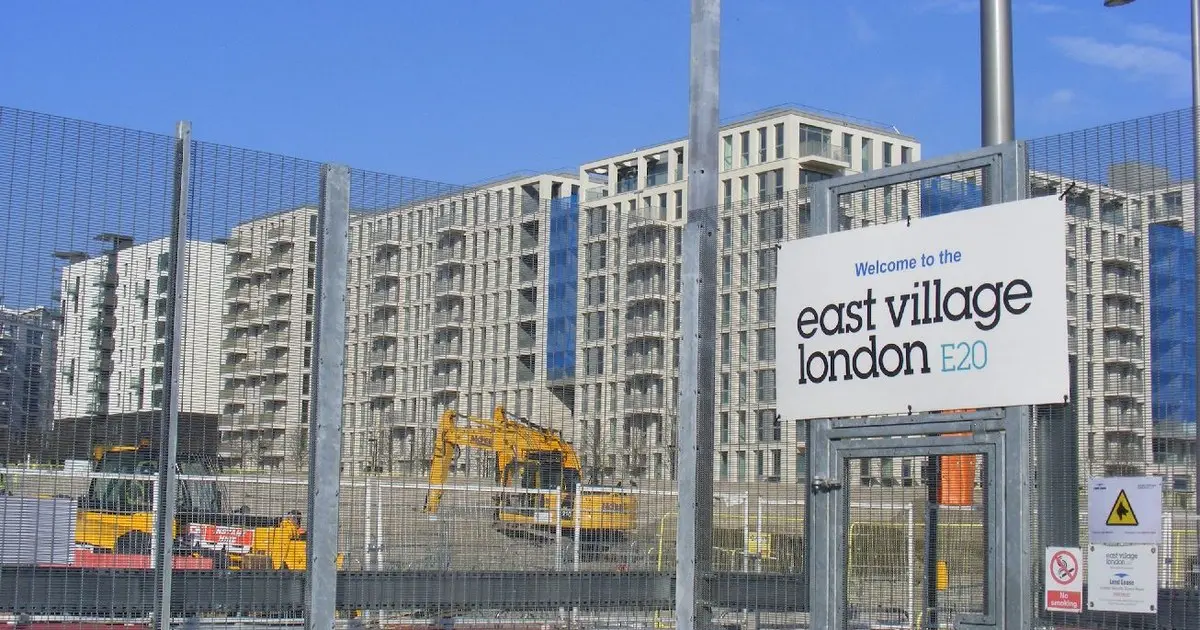
London’s draft housing plan falls far short of what the capital actually needs, the property industry has warned, as a consultation on the capital’s future closed today.
Real Estate:UK (RE:UK) has said the 10-year target of 558,000 new homes set out in the draft London Plan “must go further” and stand closer to the government’s own assessment of housing need.
The consultation for the streamlined 20-year plan was unveiled in July by the mayor of London, Sir Sadiq Khan, with a proposed target of delivering 558,000 new homes in the 10 years to 2037 — revised 38 per cent down from last year’s consultation.
But according to the government’s own assessment, the capital requires approximately 850,000 new homes over that same period — nearly 300,000 more than the plan proposes.
“Materially below identified need”
In its response to the consultation, which closed today, RE:UK said that while many areas of the plan “should be commended” — including stronger recognition of industrial and logistics land needs — the housing target is “materially below identified need”.
The industry body also argued that setting a target “substantially” lower than assessed need is “concerning in its own right but also sets an unhelpful precedent” for other spatial development strategies across the country.
Sam Bensted, assistant director at RE:UK, said: “The draft London Plan contains many encouraging signals. Its streamlined approach, stronger recognition of industrial and logistics land needs and dedicated data centres policy are all positive steps.
“However, when it comes to housing, the plan does not go far enough. London faces acute housing, infrastructure and economic pressures, and needs a visionary strategy that confronts its problems rather than plans around them.
“While London’s development challenges have no doubt been reflected in the realities of the outlined housing targets, the new London Plan will be one of the first in a new generation of SDSs.
“As such, the GLA must be more ambitious in outlining its blueprint for local delivery, setting the capital on a truly pioneering pathway to growth and equally importantly setting the tone and precedent for other SDSs to come across the country.”
What is the London Plan?
The London Plan is the mayor’s spatial development strategy — the document that sets out how the capital should grow over the coming decades, covering housing, jobs, transport and the environment. Every borough’s local plan must be in general conformity with it.
The current draft is a slimmed-down version of its predecessor, and its housing target has been one of the most contested elements. A 38 per cent reduction from last year’s consultation figure reflects, the mayor’s office has suggested, a more realistic assessment of what can actually be delivered.
Critics, including RE:UK, say realism should not mean planning for failure — and that a target set well below assessed need risks locking in the housing shortfall for a generation.
The scale of the challenge
London’s housing crisis is well documented. Rents hit a record £2,825 a month this month, and demand continues to outstrip supply across the capital. For young Londoners trying to get on the ladder, the gap between need and planned supply is the difference between a home and a waiting list.
The gap between the plan’s 558,000 homes and the government’s 850,000 assessment is roughly 292,000 homes — a shortfall that, if left unaddressed, would leave hundreds of thousands of Londoners without the homes they need.
With the consultation now closed, the mayor’s office will consider responses before the plan moves toward examination. Whether the housing target is revised upward remains to be seen — but the industry’s message is clear: 558,000 homes will not be enough.
London Streets has been covering record London rents and planning applications in Barnet this week.