


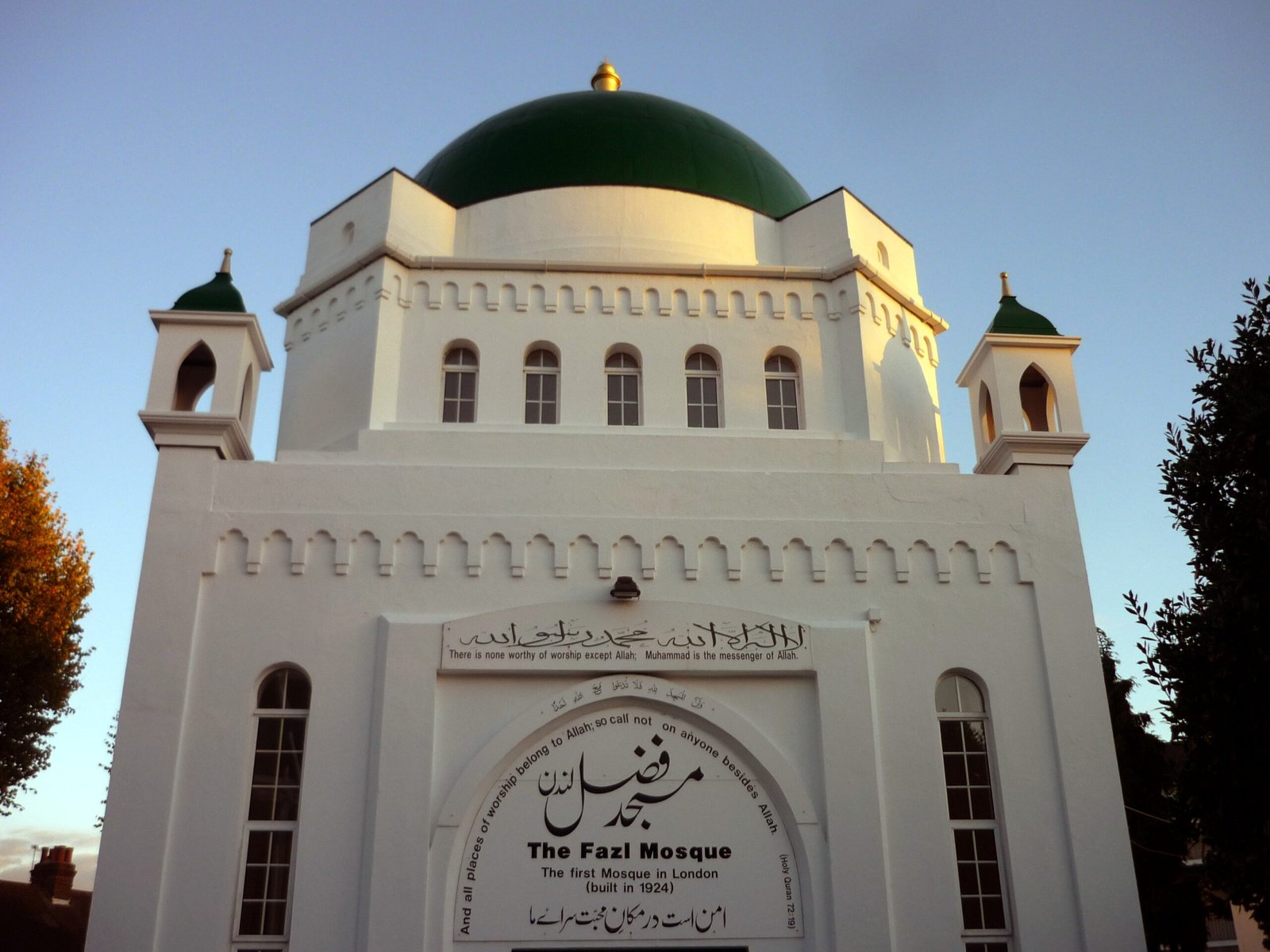
A white-domed landmark on a quiet residential street in Southfields is about to mark a milestone few London institutions can claim: one hundred years of continuous worship, outreach and community service. The Fazl Mosque — the first purpose-built mosque in the capital — celebrates its centenary on Saturday, October 3, a century after it first opened its doors in 1926.
Set back from the road on Gressenhall Road, the mosque has grown into far more than a place of prayer. From its earliest years it served as a missionary headquarters, sending preachers to towns and cities across Britain, and it has since become known for charitable work, education and interfaith outreach reaching well beyond its own congregation — a record its leaders sum up as a “beacon of peace”.
The centenary will be marked with a formal Centenary Reception on Saturday, October 3, 2026, bringing together civic leaders, diplomats and community representatives to reflect on the mosque’s hundred-year contribution to British public life.
“For one hundred years, the Fazl Mosque has stood as a place of worship, peace and service to humanity,” said Hazrat Mirza Masroor Ahmad, the Fifth Caliph and Worldwide Head of the Ahmadiyya Muslim Community. “Its history reflects the principle that true faith requires us to serve our neighbours, show loyalty to the country in which we live, and make peace with all people, regardless of their faith or background. As we mark this centenary, I pray that the mosque may continue to be a beacon of peace and a means of bringing people together for generations to come.”
A century of firsts
The mosque’s foundation stone was laid in 1924 by Mirza Bashir-ud-Din Mahmud Ahmad, and the building was completed two years later at a cost of £6,223 — raised entirely from donations by Ahmadi Muslims in India, much of it contributed by women in Qadian, Punjab. Designed by Thomas Mawson in a style blending Mughal architecture with contemporary British influences, its green dome and white minarets quickly became a south-west London landmark.
When it formally opened in October 1926, with Maulana Abdul Rahim Dard as its first imam, it was the first mosque in London built from the ground up as a place of Islamic worship — a status it still holds a century later.
Over the decades its guestbook has read like a roll-call of twentieth-century history. Muhammad Ali Jinnah, the founder of Pakistan, worshipped there, as did Sir Muhammad Zafrulla Khan, who went on to preside over the United Nations General Assembly, and Professor Abdus Salam, the first Muslim to win a Nobel Prize in science. Members of the Saudi royal family have visited, along with the Prince Edward in 2011 and the Archbishop of Canterbury, Justin Welby, in 2017.
In 1984, after Pakistan’s Ordinance XX restricted the religious life of Ahmadis, the community’s Fourth Caliph, Mirza Tahir Ahmad, moved to London, and the Fazl Mosque became its de facto international headquarters — a role it held until 2019, when the headquarters moved to Islamabad in Tilford, Surrey. A decade into that period, in 1994, Muslim Television Ahmadiyya International began broadcasting from the mosque.
Official recognition has followed in recent years: Historic England granted the building listed status in 2018, and in March 2026 Wandsworth Borough Council awarded it a green heritage plaque.
“Everything we do here began there”
For many British Ahmadis, the centenary is personal. Shakeel Ahmed Syed, a former regional president of the Ahmadiyya Muslim Community UK, said: “Our community in Wandsworth exists because of that mosque in London. From the Fazl Mosque, missionaries were sent out to towns and cities across Britain to build communities like ours, and everything we do here began there.”
“A hundred years on, we mark this centenary the way we were taught to – by helping the people around us,” he added. “That is what a mosque is for. It is a beacon of peace for all.”
That open-door tradition continues today, with the mosque regularly welcoming visitors of all faiths and none — work that has taken on fresh resonance at a time when hateful attacks on Muslim venues have underlined the value of interfaith understanding.
Timeline: 100 years of the Fazl Mosque
- 1924 — Foundation stone laid by Mirza Bashir-ud-Din Mahmud Ahmad.
- October 1926 — The mosque formally opens as London’s first purpose-built mosque, funded by donations from Ahmadi Muslims in India.
- 1984 — The Fourth Caliph moves to London; the Fazl Mosque becomes the community’s international headquarters.
- 1994 — Muslim Television Ahmadiyya International begins broadcasting from the mosque.
- 2011 — The Prince Edward visits the mosque.
- 2017 — The Archbishop of Canterbury, Justin Welby, visits.
- 2018 — Historic England grants the building listed status.
- 2019 — The international headquarters moves to Islamabad, Tilford.
- March 2026 — Wandsworth Borough Council awards the mosque a green heritage plaque.
- 3 October 2026 — A Centenary Reception marks 100 years.
Centenary events: how to attend
The centrepiece of the celebrations is the Fazl Mosque Centenary Reception on Saturday, October 3, 2026, an evening event bringing together civic leaders, diplomats and community representatives at the mosque itself. Members of the public who wish to attend are asked to register in advance through the community’s official centenary page.
The mosque stands at 16 Gressenhall Road, London SW18 5QL, a short walk from Southfields station on the District line. Community-led centenary events have also been taking place around the country in the run-up to the anniversary, and anyone seeking details of local celebrations can contact the community’s external affairs team.