


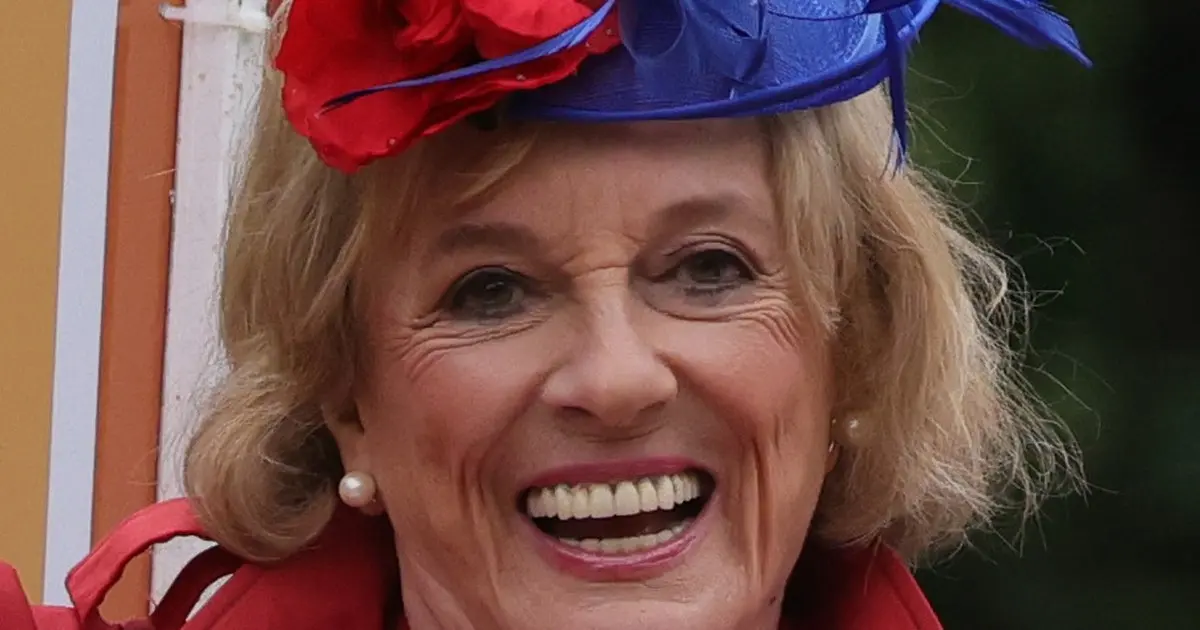
Dame Esther Rantzen, the television presenter who made “That’s Life!” a weekly fixture in British living rooms for two decades and founded the Childline charity, has died aged 86, her family has announced.
In a statement published on Wednesday, her family paid tribute to “the most wonderful mother” and “cherished grandmother”, praising her “ability to comfort every heartache, her beautiful way with words and her expert guidance”.
“Our adored mother, Dame Esther Rantzen, died today,” the statement said. “Her legacy of compassion and understanding will live on in her charities Childline and the Silver Line, and through those of us who were lucky enough to love and be loved by her. We are grateful she is finally at rest with her beloved husband, Desmond Wilcox, but we will miss her immeasurably. She was our sunshine.”
She died surrounded by family at her home in the New Forest.
Born in Berkhamsted, Hertfordshire, in 1940, Rantzen read English at Oxford before joining the BBC in 1963. She fronted “That’s Life!” from 1973 to 1994, and at its peak the consumer-affairs show drew audiences of more than 20 million. It was credited with helping to make child car seat belts compulsory, replacing concrete playground surfaces with safer ones, and encouraging organ donation.
Childline and a final campaign
The programme’s most lasting legacy came after a feature on child abuse: when phone lines opened for 48 hours, they were inundated with calls from children. Rantzen went on to set up Childline as a permanent confidential helpline in 1986. It merged with the NSPCC in 2006, and she remained its president until her death. She later founded The Silver Line in 2012 to combat loneliness among older people.
Her honours included an OBE for broadcasting in 1991, a CBE for services to children in 2006, and a damehood in the 2015 New Year Honours.
Diagnosed with stage-four lung cancer in 2023, Rantzen spent her final years as one of the most prominent voices in the campaign to legalise assisted dying in England and Wales. She had openly discussed travelling to the Dignitas clinic in Switzerland — but said last month that she had become “too physically fragile to make the journey”. When MPs defeated the assisted dying bill this month, she called it a “tragic day”.
“Making a difference is addictive, so when so many people contacted me about assisted dying when I mentioned my concern about the current law, I could hardly let them down, could I?” she said of her final campaign.