


The London Fire Brigade has a new recruit with four paws, boundless energy and a nose for trouble. Meet Fire Investigation Dog Chase, a five-month-old working Cocker Spaniel who has begun training with the brigade’s Fire Investigation Team, starting the long journey towards full certification.
If the young pup makes the grade, his working life will be spent sniffing out the faintest traces of accelerants at fire scenes — the chemical clues that help investigators decide whether a blaze was an accident or was started deliberately.
Chase is treading a well-worn path. He follows in the paw prints of Sherlock, a recently retired fire investigation search dog, and will learn the ropes alongside the unit’s two serving dogs, Smokey and Simba.
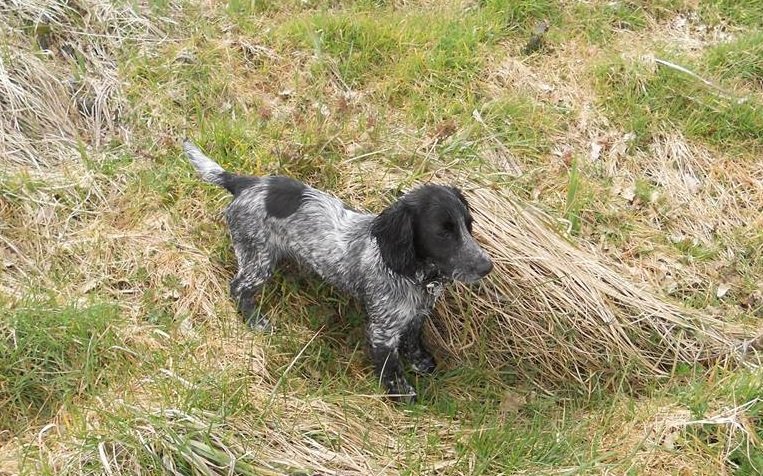
What fire investigation dogs actually do
Fire Investigation Search Dogs — known as FISDs — are among the most specialist animals in Britain’s emergency services. They are trained to detect minute traces of a range of ignitable substances, sweeping burnt-out rooms for chemical traces that human investigators would miss. Their findings show exactly where samples should be taken for forensic analysis, and can prove pivotal in establishing how a fire began.
The dogs are selected while still very young, picked out for qualities including an unstoppable drive to play. That enthusiasm becomes the engine of everything they learn: training runs entirely on positive reinforcement, with each successful find of an ignitable substance’s scent rewarded by a rousing game with a tennis ball.
Chase at a glance
- Breed: Working Cocker Spaniel
- Age: Five months
- Role: Trainee Fire Investigation Search Dog (FISD)
- Handler: Sub Officer Peter Guppey
- Canine colleagues: Smokey and Simba (serving); Sherlock (retired)
- Favourite reward: A tennis ball
- Final hurdle: A formal assessment alongside his handler
From single rooms to stairwells: how Chase will train
Over the coming months, Chase will work through an intensive programme designed to turn a playful puppy into a precision detection dog:
- Scent recognition — learning the smell profiles of different ignitable substances.
- Building complexity — searches growing from a single room to multiple rooms and across floors.
- Tricky spaces — letterboxes, the voids beneath stairs and large open areas where scent behaves unpredictably.
- The signal — learning a clear, unmistakable indication that tells his handler he has found something.
- Assessment — proving, with Sub Officer Guppey, that they can work as a team across varied environments and successfully locate traces of ignitable substances.
“A great little character”
His handler is already smitten. Sub Officer Peter Guppey describes Chase as a great little character who is a pleasure to work with — enthusiastic, inquisitive and always keen to get involved — and says he is really enjoying getting to know him.
There is a lot for the pair to learn together over the coming months, Guppey says, with searches gradually growing more demanding as the puppy’s confidence and skills develop, all building towards their joint assessment. Being part of that journey from the very beginning is deeply rewarding, he adds — and he is excited to see what Chase can achieve.
Fire Investigation Station Commander Darren Woodhams says the search dogs are a valuable asset to the brigade’s investigators, and that selecting and training the next generation is an important part of keeping that capability alive. Chase is already showing the drive and enthusiasm the brigade wants to see in a working dog, he says, and is responding well to his early training. There is still a long way to go, but the pup has made a promising start.
Why the nose knows
A dog’s sense of smell is tens of thousands of times more sensitive than a human’s, and fire investigation dogs put that biology to forensic use. After a blaze, volatile accelerants such as petrol, white spirit or paraffin may survive only as microscopic traces soaked into floorboards, carpets or soil. A trained spaniel can pick those surviving molecules out of the cocktail of burnt smells left behind, then pinpoint the exact spot investigators should sample.
That precision matters in a city where fire investigators are routinely called to determine how serious blazes began — from the late-night flat fire in Kilburn after which a man was held on suspicion of arson, to the fatal Neutron Tower fire, one of the capital’s most complex recent investigations.
And London’s firefighters are kept busy far beyond investigation work, tackling everything from trackside blazes that halt trains to the garage fire behind a Ladbroke Grove mews that briefly closed the Tube station.
Long careers for cold noses
The brigade’s fire investigation dogs can enjoy long working careers, their skills kept at the required standard through regular refresher training and reassessment. If Fire Investigation Dog Chase passes his assessment, Londoners could be reading his name in dispatches for years to come.