


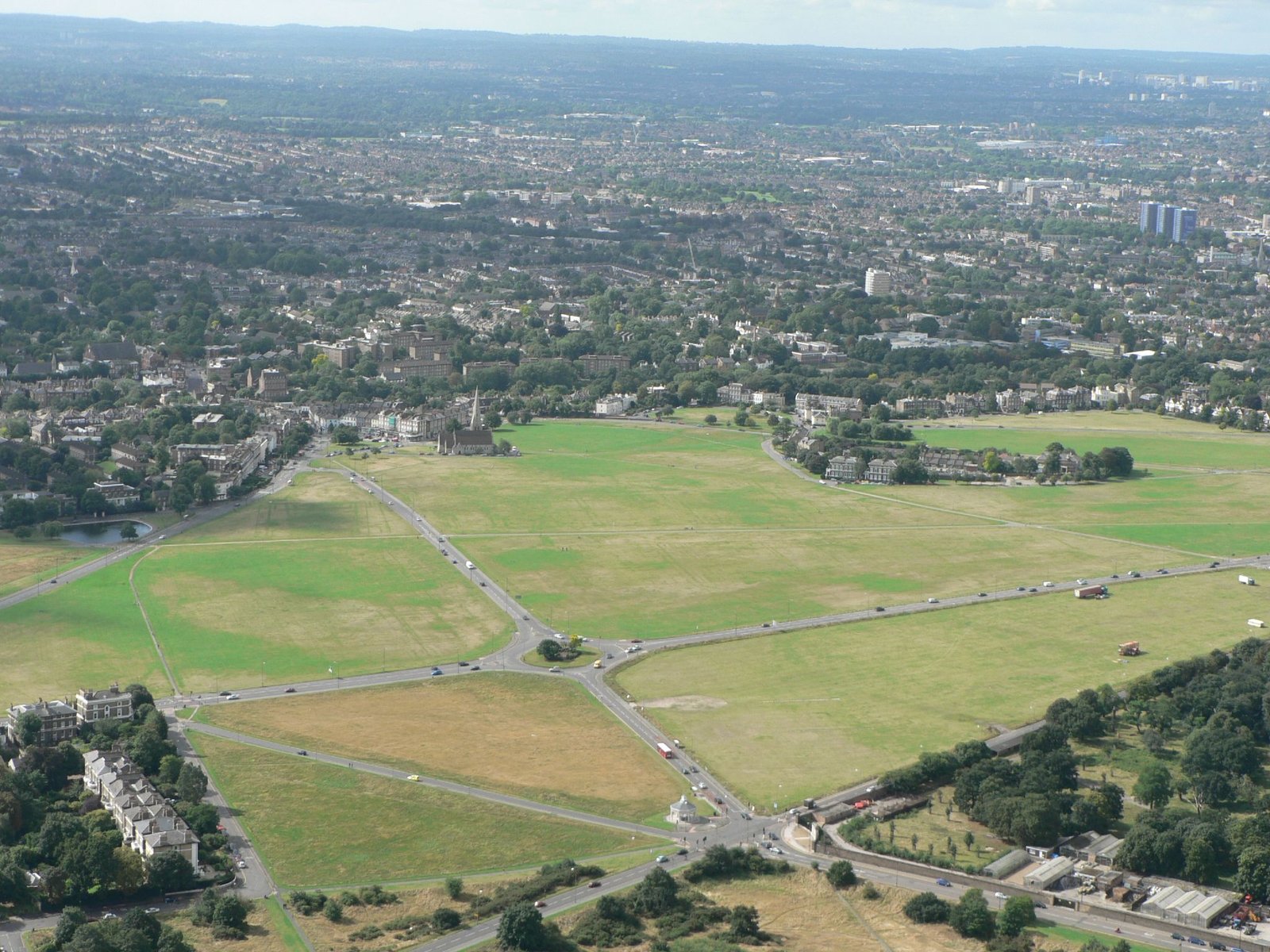
Stand on Blackheath on a clear morning and you can see for miles: the towers of the City one way, the North Downs the other, and all around you… nothing. No houses, no blocks of flats, no retail parks. Just 275 acres of open heath, sitting improbably in the middle of one of the most built-up corners of south-east London.
It is one of the capital’s great oddities. While Greenwich, Lewisham, Kidbrooke and Charlton were swallowed by bricks and mortar long ago, the Blackheath undeveloped acres were left alone. The reason is a tangle of bad soil, old ownership laws and one crucial piece of Victorian legislation – and the story stretches back nearly a thousand years.
Blackheath: the key facts
- Where: between Greenwich and Lewisham, south-east London
- Size: 275 acres of protected open heathland
- Saved by: poor soil, manorial ownership law, and protection since 1871
- Famous for: the Peasants’ Revolt, the Battle of Blackheath, and the start of the London Marathon
- Getting there: Blackheath station (Southeastern) or buses from Lewisham and Greenwich
Why nobody built on it: bad dirt and old law
The first thing that saved Blackheath was that it was, frankly, useless. The ground was poor – thin, gravelly soil that no sensible farmer would bother with. Instead of crops, the heath was used for rough grazing and for digging: chalk, sand, gravel and stone were all hacked out of it for centuries. The scars of that industry are still there if you know where to look. Some of the heath’s ponds are flooded gravel pits, and the unfilled Vanbrugh Pits are a surviving patch of the much rougher landscape that once covered the whole area.
The second protection was legal. Blackheath was never ordinary land you could simply buy and build on. It was classed as manorial waste, and ownership was split between powerful landlords – including the Dartmouth estate and the Crown’s own Royal Manor of East Greenwich. Putting up houses meant getting the landowner’s permission, and for centuries nobody had much incentive to ask.
A timeline of the heath
- 1381 – Rebels of the Peasants’ Revolt muster on the heath.
- 1432 – Humphrey, Duke of Gloucester, encloses around 200 acres at the northern edge. It becomes Greenwich Park.
- 1450 – Jack Cade and his followers camp on Blackheath during their rebellion.
- 1497 – The Battle of Blackheath: Henry VII’s forces defeat Cornish rebels marching on London.
- Late 1600s – Lord Dartmouth begins developing the western side; grand houses follow.
- 1700s-1800s – The heath becomes a fashionable address; Blackheath Village grows up around its edges.
- 1871 – The heath is taken into public care and protected for Londoners.
- 1940s – Wartime: sections ploughed for food, Nissen huts built, bomb rubble used to fill old pits.
- Today – The heath hosts recreation, public events and the start of the London Marathon.
Rebels, royalty and highwaymen
Because it was open, elevated and sat squarely on the main road between London and Kent, Blackheath became the stage for some of English history’s most dramatic episodes. Wat Tyler’s rebels gathered here in 1381. Jack Cade’s men camped here in 1450. And in 1497 the heath gave its name to a battle, when the Cornish rose against Henry VII’s taxes and were crushed within sight of the capital.
It was also where London came out to meet its monarchs – royal welcomes were staged on the heath – and where ordinary Londoners came for fairs, religious gatherings and sport. The same lonely road that made it a meeting place made it dangerous too: for centuries the route past the heath was notorious for highwaymen lying in wait for travellers.
The name has nothing to do with the plague
Ask a Londoner why it is called Blackheath and there is a good chance you will hear about the Black Death – the story goes that plague victims were buried here in their thousands. It is a great tale, and it is wrong. The name was recorded long before the 14th-century plague arrived, and historians say it simply describes the look of the place: a dark, sombre heath. The plague dead were never its namesakes.
Saved by protection in 1871
By the Victorian era, London’s appetite for building land was insatiable – and the heath, ringed by increasingly grand suburbs, must have looked like a developer’s dream. What stopped it was the decision in 1871 to take the heath into public care, protecting it for the benefit of Londoners. The freeholders kept their rights over the soil, but the land itself was secured as open space.
More than 150 years on, that decision still shapes the map. The heath straddles the boundary between Lewisham and Greenwich, two boroughs whose councils still argue over development on its fringes, while all around it the city kept building: thousands of new homes are rising at Charlton Riverside to the east, and estates long ago closed in from every other side.
Blackheath today: how to enjoy it
The heath remains what it has always been: London’s front lawn. Dog walkers, runners, kite-flyers and picnickers claim it daily, and each spring it does its most famous job of all – forming part of the starting area for the London Marathon, when tens of thousands of runners set off across its turf.
Getting there is easy: Blackheath station (Southeastern) sits at the village edge, with buses fanning out across south-east London. Combine it with a wander through Blackheath Village’s independent shops and cafes, or walk north down to Greenwich Park – itself once part of the same heath, enclosed nearly 600 years ago.