


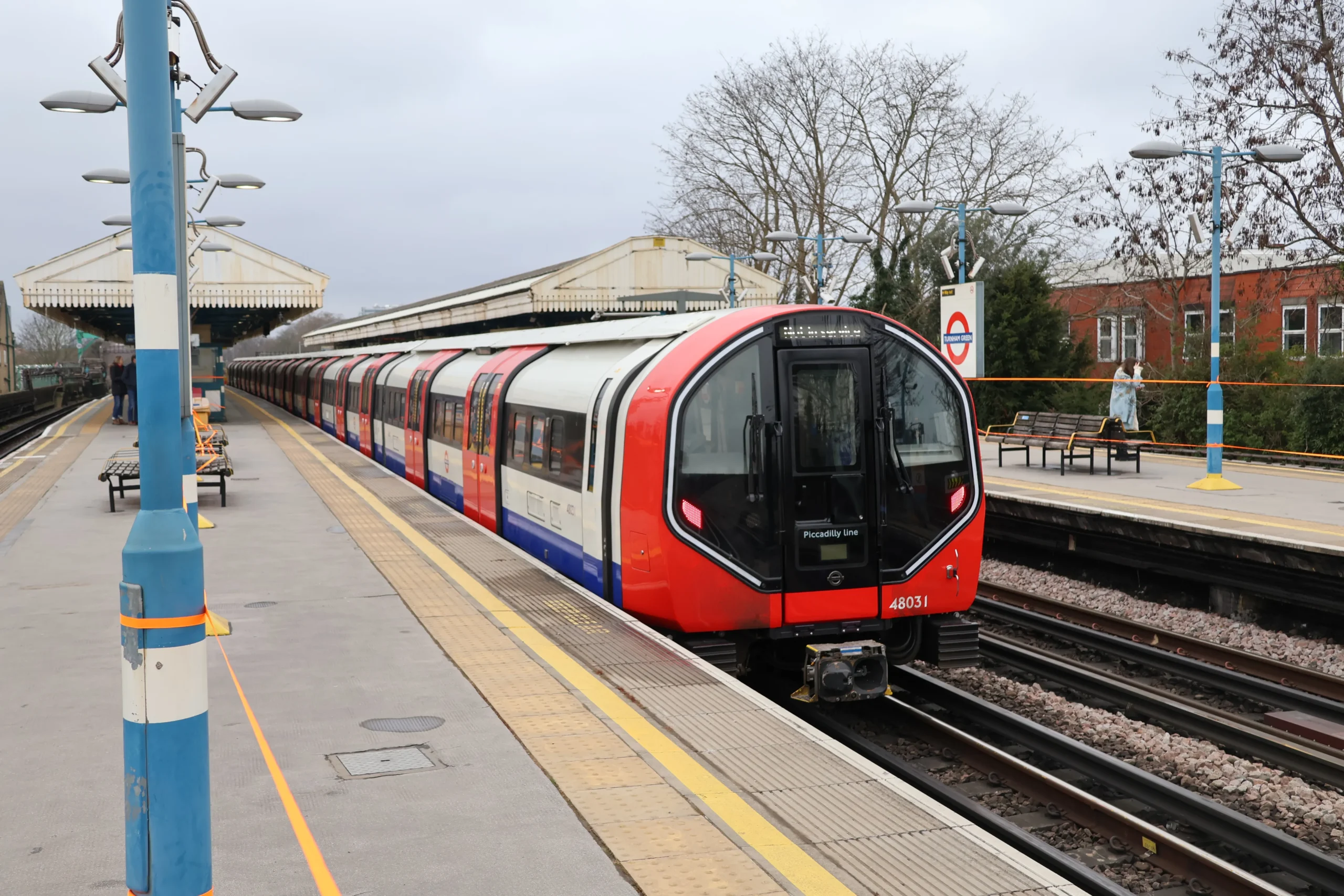
Londoners have been given their clearest look yet at the next generation of Tube trains, as a full-size new Piccadilly line train was unveiled to the public at the world’s largest rail trade fair.
Siemens Mobility, working in partnership with Transport for London, revealed the Inspiro London fleet at InnoTrans 2026 in Berlin, where visitors were taken on a guided tour of the 113-metre-long, nine-carriage train and shown the features that will transform journeys on one of the Underground’s busiest lines.
The unveiling offers the most detailed public view so far of the trains that will eventually replace the Piccadilly line’s ageing fleet. Four-fifths of the new vehicles are being built at Siemens Mobility’s £240 million Goole Rail Village in East Yorkshire, underlining the programme’s role in sustaining British rail manufacturing jobs and skills.
Andy Lord, London’s Transport Commissioner, said the trains would “fundamentally change the experience of travelling on the Piccadilly line when they start entering service”.
He added that for many international visitors the trains would form a first impression of the capital, “be it through Heathrow or St Pancras International”, and promised they would be more energy efficient and spacious, with CCTV, air conditioning and better customer information during journeys.
“Journeys will be more accessible, safer and faster, and the experience for our customers will be transformed,” he said.
Passengers can expect air-conditioned, walk-through carriages with improved accessibility, onboard CCTV and upgraded digital information systems. Siemens Mobility says the fleet will increase capacity by 10 per cent while using 20 per cent less energy than the current Piccadilly line trains — a combination aimed at easing crowding while cutting running costs.
The trains will also be digitally connected through Siemens Mobility’s Railigent platform, sending real-time location and component health data to TfL depots. The system is designed to let engineers spot developing faults before they cause delays, shifting maintenance from fixed schedules towards predictive, data-led intervention.
Siemens Mobility also used the Berlin showcase to promote its wider digital rail offering, including Railigent X, Signaling X and the Mobility Software Suite X — tools from its Siemens Xcelerator portfolio designed to help operators improve performance, increase reliability and make better use of existing infrastructure.
Aglaja Schneider, joint chief executive and managing director of Siemens Mobility UK and Ireland, said she was “incredibly proud” to see the new Piccadilly line train exhibited at InnoTrans, having earlier in her career served as the programme’s project director.
“It’s fantastic to see how far the project has come and to share that progress with the wider rail industry,” she said, thanking teams across Siemens Mobility and Transport for London who had “worked side by side” from design and manufacturing through to testing. She added that building the trains at Goole represented “continued investment in UK manufacturing and skills”.
The reveal follows the formal unveiling of the 2024 Stock fleet in Berlin — reported as the first time TfL has ever displayed a vehicle at InnoTrans in the fair’s 30-year history. TfL has ordered 94 of the Siemens-built trains under a £1.5bn deal, which will replace the line’s 86 existing trains, with entry into passenger service targeted for a window between December 2026 and June 2027.
The Piccadilly line renewal sits alongside a wider wave of rail investment across the capital, from Southwark’s renewed push for the Bakerloo line extension to the ongoing consultation on the West London Orbital Overground line.